
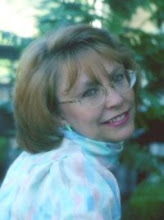
Liza Tully is a pseudonym for Elisabeth Brink, who writes dark thrillers under the name Elisabeth Elo, as well as literary fiction under the name Elisabeth Panttaja Brink.
Before turning to fiction writing, she worked as an editor at a children’s magazine, a project manager at a tech company, and a counselor at a halfway house. A magna cum laude graduate of Brown University, she earned a PhD in American Literature from Brandeis University, and is the author of scholarly articles on diverse subjects. She lives in Boston, MA.
“Standing ovation! Fans of Anthony Horowitz and Richard Osman will swoon to find their new favorite author.” — Hank Phillippi Ryan
“What a terrific start to a new series: Liza Tully has reeled me in.” — Criminal Element
Please give a warm welcome to Liza Tully!

I will be reviewing her newest book, The Forty Year Grudge, soon.
Why do you write? Do you love it or love having done it? What motivates you?
Writing totally engages me—mentally, emotionally, spiritually, and even physically to the extent that I almost feel in my body the things that are happening on the page. Readers feel this too—imaging tests have shown that our movement neurons (or something like that) light up when we’re reading. Maybe that’s why writers love putting in chase scenes or fight scenes or train rides with changing scenery. The sense of movement can be as engaging as the emotion.
In my life, I can’t think of any activities besides writing and reading that give that sense of total engagement, but I’m sure there are many. Maybe runners feel that when they’re running: somehow they’re experiencing much more than the rest of us imagine. They hit the trail and forget their problems. For a little while, mind, body, and spirit are all turned on and working together. Once you feel that, you probably want to do it again.
Do you outline the plot or some variation of that (a little/a lot of detail, a strict 3 act structure etc.) before sitting down and writing?
I scribble in a notebook anything that comes to me--character, setting, plot, odd details. I just let my mind roam. I write lists: members of a family, suspects, plot points. As long as I’m not wedded to anything, it doesn’t matter what I put down. I sometimes ask myself general questions such as “Why do people murder?” Or “What makes siblings angry at each other?” Or “Why do people dread school reunions?” I think about it for a while and write down the answer. Sometimes I try a little outline, and if I don’t know what should come next in the story, I ask, “What should come next in this story?” and write down whatever pops into my mind.
I don’t have to use any of it. I don’t even read it over. If I lost the notebook, it wouldn’t matter. The main thing is that I scare up a lot of ideas, so when it’s time for a first draft I have almost too much material rather than too little.
What is your work schedule like when you're writing and how long does it take you to write a book?
I used to write mostly on weekends when I could. My schedule was pretty erratic. Now that I’m writing fulltime, my schedule is much more consistent. I usually write from noon to four (if I’m writing new stuff); or from noon to six (if I’ve already got a draft). If I’m doing something like editing that doesn’t require any invention, I might work from noon until seven or eight. In that kind of situation, I actually prefer to work longer hours to get it done.
I start at noon because it’s hard to concentrate if I have too many “to dos” hanging over me--things like bills, appointments, house stuff, food stuff, social stuff, exercise. I try to get as much of that out of the way as possible in the morning, so I can sit down at my desk at noon without guilt. I think this habit is a holdover from the era of my life when I felt that writing fiction was a self-indulgent activity and I could only justify the time if I wasn’t behind on anything else.
Writing a novel has taken me as long as three years, but that was when I was working, raising kids, and not very confident. My ideal time now is eighteen months. If I had a really ambitious project, which I don’t at the moment, it would probably take longer.
What in your background prepared you to write mysteries? (from her website)
The only sign that I would eventually become a writer is that I was a voracious reader as a kid. I remember riding my bike to the public library in my town and trying to fit all the books I’d borrowed into my bike basket. On the way home, I had to watch out for all the bumps in the road so the books wouldn’t bounce out onto the street.
Back then, I couldn’t imagine ever becoming an author. It seemed like such an exotic, out-of-reach job, like being a movie star. And I couldn’t imagine sitting by myself for hours, days, weeks, months, years, or however long it took professional authors to write books. I had enough trouble doing my homework.
But I was always writing or editing something. After college, I got a job as an editorial assistant for a children’s magazine called Cricket. It was loads of fun and I thought I would go to New York and become a trade book editor, but fate took me in another direction, and I ended up being a technical editor for, among other things, a periodical called the Swine Report (yes, it was about pigs). After that I wrote marketing material, ad copy, whatever came my way. Then in grad school, it was scholarly essays (Cinderella, fairy tale heroines, Walt Whitman).
In my thirties, I was raising kids and working as an adjunct professor teaching English. It was a busy life, but I was restless. I needed a challenge, something to keep my mind humming and growing, so one Sunday morning, almost on a whim, I wrote the first draft of a short story.
I’ve been writing fiction ever since. First a lot of short stories published in various literary journals; then, finally, my first novel, a comedy called SAVE YOUR OWN (an Indie Next Pick) published under the name Elisabeth Brink by then Houghton Mifflin. From there, under the name Elisabeth Elo, I wrote a suspense novel called NORTH OF BOSTON (Viking 2014) that Booklist named as one of the best debut crime novels of 2014. That was followed by FINDING KATARINA M (Polis 2019) which Publisher’s Weekly called “a tense and illuminating journey” and Elizabeth George called “an amazing accomplishment.”
Which brings me to where I am now, with my Merritt and Blunt mystery series written under the name Liza Tully.
How did you get your first break to getting published? Was it at a writer's conference or mailing a query letter?
I started writing short stories. They’re very hard to get published, so I had to adapt to getting many rejections before an acceptance. That experience probably helped me when I finished my first novel and started querying literary agents. I expected to receive many rejections and wasn’t overly dispirited by them. However, it was still a grind. My first novel was never published; neither was my second.
I’ve had better luck since then, but there’s never been a time when I’ve felt secure. I know of too many writers whose published novels got good reviews and seemed to do pretty well, and then these writers seemed to just disappear from the scene. I doubt it was because they stopped writing. I think it was because they stopped getting published—probably for reasons they couldn’t control. Basically, this industry is brutal. You have to be crazy to do it. Turns out, quite a lot of people are. (To answer your question, I’ve relied on query letters.)
Tell us about your next book in the series - or next project? What is your biggest challenge with it?
The next book in the Merritt & Blunt mystery series is set in New York City. The mystery centers on an influential family and the theatre world. My biggest challenge is plotting the relationship between the two main characters (the famous detective, Merritt, and the rookie detective, Blunt). Most of the humor in the first two books relied on Blunt being a bit of a doofus and thus bringing out the worst in Merritt.
That dynamic can’t continue forever without becoming a rather tiring cliché that ignores the characters’ true complexity. Blunt is actually pretty smart, and Merritt does have a smidgen of affection for her protégé and a tiny streak of kindness. So now they’re depending on their author (me!) to do them justice while readers (I assume) are still expecting me to be funny. Oy vey. As one of the characters in the book keeps saying, “My nerves are frayed!”
Do you have a newsletter or blog for readers to stay informed of your news?
Sign up for her quarterly newsletter for updates, giveaways, musings, book recs, and information about new releases on her website at the bottom of the page (click here)
Instagram (click here)
Thank you so very much for this interview, your journey to a successful author is interesting and enlightening.
~ ~ ~ ~ ~
Dear Readers, thank you for following and reading this blog and please recommend to friends and family who will enjoy it.
Join my author newsletter: Click Here






0 comments:
Post a Comment