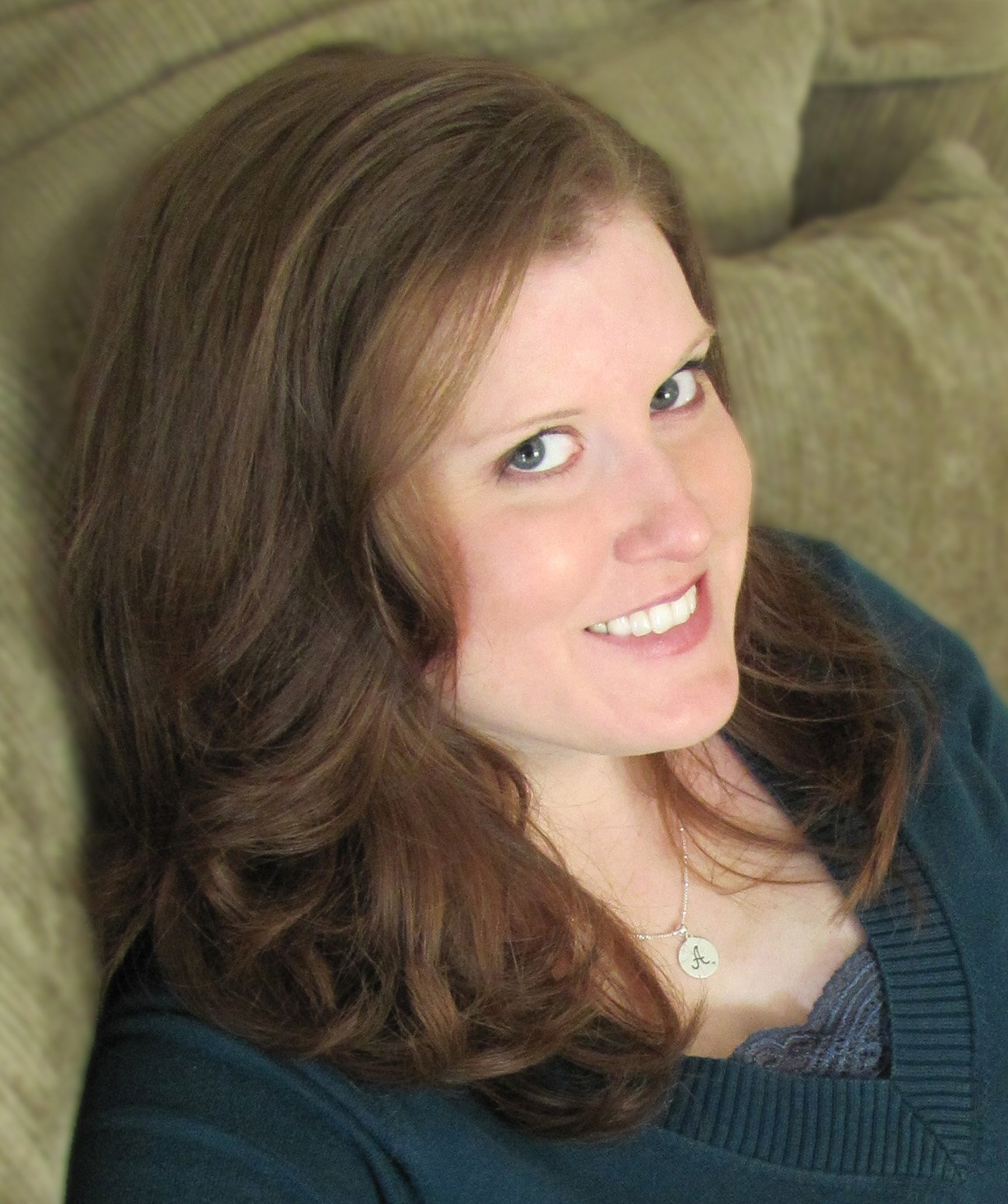
Showing posts with label Author interview. Show all posts

Monday, July 31, 2017

Author Interview - Susan Elia MacNeal

Today we have Susan Elia MacNeal, author of the smash hit Maggie Hope series set in WWII.   Read my review of newest addition to the series, The Paris Spy (click here) including a book giveaway!  Please welcome Ms. MacNeal.


1)  What drew you to write a historical mystery and why the WW2 era?

 You know, I never planned on writing a historical mystery. But I was writing fiction when I went to London with my husband (who was there as Bear for the Disney Channel show Bear in the Big Blue House). I ended up going to the Churchill War Rooms, the underground bunker where Churchill and his staff ran World War II. It was a powerful, transformative experience — and I just knew I had to write about it.


2)  What is your work schedule like when you're writing and how long does it take you to write a book?

I usually write every morning from about 8 or so to noon. After lunch, I do a little more and also answer emails and whatnot. When I'm starting a new novel it's harder, because I don't know my characters and setting as well. Towards the end, I put in really long days because the people and the world seem so familiar. It usually takes me a year to write a book for my editor, and then more time as it goes through editing and copyediting.

3)  What in your background prepared you to write not just mystery novels but historical intrigue?

 I have a B.A. in English from Wellesley College and also studied history. But basically I just love to read and learn. I knew about World War II, of course, but more of the big battles and also from an American perspective. I had to educate myself about World War II in London, which I did with books, videos, and talking to people in the UK who lived through the war.

4)  Who is your favorite Mystery character (by another author)?

 I'm a huge fan of Flavia de Luce, Alan Bradley's heroine. The Favia series starts with The Sweetness at the Bottom of the Pie. I'm also currently obsessed with Ann Cleeves, who writes the Shetland Island series. The first book is Raven Black. I'm also reading and rereading a lot of P.D. James, currently on An Unsuitable Job for a Woman, about private investigator Cordelia Gray.

~ ~ ~ ~ ~ 
Thank you Ms. MacNeal for that interview and joining us today.

Now, please read further if you are interested in the women Churchill utilized as spies in Nazi occupied countries in his full out effort to stop Hitler's advance.  It is this effort that the Maggie Hope series highlights and is built upon.  Here is a clip on the SOE training.


https://youtu.be/8oImDIZO2N4

I am fascinated by the story of Eileen Nearne, one of the SOE spies for the Britain during World War II.

She died at 89 years old, poor and alone in September of 2010 in England.  When her small apartment was being emptied, her wartime medals (Croix de Guerre by the French government, and appointment as a Member of the Order of the British Empire) were discovered and her secret was out.  She had no family or friends to pay for her funeral and was about to be cremated, until the news was spread that she was a war hero.  The public flooded local officials to help pay for her funeral and to attend her services.  The Royal British Legion placed a flag on her casket.  There was even a French official in attendance at her funeral to honor this incredible brave woman.  Her eulogy was given by Adrian Stones, Chaiman of the Special Forces Club.

It turns out she was only 23 when she was sent into occupied France since she spoke fluent French. She was one of 39 (some report 57) British women who were parachuted into France as secret agents by the Special Operations Executive [SOE is featured in The Paris Spy], a wartime agency known informally as “Churchill’s secret army.”  She was caught by the Nazis using her radio to send information.  She endured torture but maintained her cover story, but was still sent to Ravensbruck concentration camp in Germany.  She managed to escape and resumed spying.  In all, she was captured three times by the Nazis, and either convinced them she knew nothing, or escaped.  The New York Times reported that after the war, she suffered emotionally from the toll of her experiences.

Then there is Nancy Wake who escaped France, but her husband didn't make it and was executed by the Gestapo.  So Nancy joined the SOE (featured in The Paris Spy) and returned to France to coordinate the 7,000 person strong Resistance attacks, led a raid against Gestapo headquarters and German gun factories.  When wireless operator codes were destroyed in a Gestapo raid, she cycled (autos were banned except for Nazi's) over 71 hours on sheer determination - through multiple Nazi checkpoints - to replace the codes so orders and weapons drops could resume.  She became the Gestapo's Most Wanted.  She was awarded the George Cross medal by Britain, the Medal of Freedom by the USA, and the Médaille de la Résistance, the Croix de Guerre – three times – and the Légion d'Honneur by France.  Nancy died in 2011, at the age of 98.  She has had books written about her and movies and documentaries made about her.


Movie Trailer: https://youtu.be/Oh7LNhr7WWQ

The 1958 black and white movie "Carve Her Name with Pride" was about Violette Szabo, who even has a museum about her work as a spy. She was another SOE agent and was trained in fieldcraft, night and daylight navigation,  escape and evasion, uniform recognition, communications, cryptography, extensive weapons training, and demolition. She provided critical information on the factories producing war materials for the Germans that were critical in determining Allied bombing targets.  On her second mission during the Normandy invasion, a Nazi roadblock resulted in a shoot out and while racing across fields she severely hurt her ankle and provided fire cover so her partner could escape and carry out the mission.  She was captured and interrogated by the SS for four days, then taken to Gesatapo HQ in Paris and tortured.  As allied forces were sweeping France, Violette was moved to Ravensburck concentration camp in Germany where she reportedly helped to save the life of Belgian resistance courier Hortense Daman.  She was eventually executed at the age of 23 and received many medals posthumously.

I shared these to highlight how the character of Maggie Hope is based on real life heroines and the plots borrow much from the history of the actual SOE and their mission.


Bookmark and Share

Monday, October 31, 2016

Author Interview - Deborah Blake

Please welcome Deborah Blake, author of the paranormal police procedural book Veiled Magic (click here for my review).  I have also reviewed another of her books not discussed in this interview, Wickedly Dangerous (click here for review).


Where did the initial idea for Veiled Magic and Donata Santori come from? 
Believe it or not, it came to me in a dream. The short story that Veiled Magic was based on was something I dreamed from start to finish, and jumped out of bed and wrote in about six hours with no break. This has never happened to me before or since!

What attracted you to this middle ground of paranormal and police procedural? 
Honestly, that was just the way the story came to me.

What do you and Donata have in common? How are you different? 
Well, we both have long dark hair, a smart-ass attitude, and we are witches. But she definitely has better luck attracting men!

In literature (other than your own), who is your favorite character and secondarily, who is your favorite paranormal character? 
I love Alanna, the teenage protagonist of Tamora Pierce’s first quartet. My favorite paranormal character is Harry Dresden, by Jim Butcher.

What are you currently reading?
I’m actually reading two different British contemporary romances (they’re my “comfort food”), but I’m about ready to start reading The Brimstone Deception, by Lisa Shearin, who is one of my favorite paranormal authors.

What's the one thing a reader has said that you've never forgotten and perhaps found startling? 
That my books have helped them get through a difficult time. I’m amazed and touched when someone says that.

If your Donata Santori series were to be made into a movie, who would you cast in your top character's roles?
For Donata herself, I always envisioned Yancy Butler (Witchblade). I’d love to see Alex O’Loughlin as Peter, and I’m open to suggestions for Magnus. (I envision him as looking much like model Gabriel Autry.)


~ ~ ~ ~ ~ ~ ~ ~ ~ ~ ~ ~ ~ 

Thank you Ms. Blake for that interview.  I have a new appreciation for Peter and Magnus now!!

Check out all of Deborah's fiction books here.


Bookmark and Share

Monday, September 19, 2016

Margaret Coel Q&A

Fans of the Wind River series by Margaret Coel will definitely want to read this Q&A.  Hard to believe the newest book released, Winter's Child, is the twentieth in the series.  Find out big news about the series. 

Q&A with Margaret Coel about Winter’s Child
Q. Is it true? Winter’s Child is the final novel in the long-running Wind River series?

A. Yes, it is true. Winter’s Child is the twentieth novel, and I knew while I was writing that it was a good place to let Vicky and Father John finish their stories.

Q. Just like that?

A. Well, not exactly. I thought about it a lot. It was a tough decision, but everything has a natural lifespan, even a mystery series. Vicky and Father John have been through a lot of adventures together. They've solved dozens of crimes and faced down and outwitted a whole range of murderers. Sometimes I was surprised they were still alive! But there they were, always ready for the next crime to solve, the next criminal to bring to justice. And I was always ready to see what they would do.

Q. So you didn’t get bored writing about them?

A. Bored is not a word I understand. I loved every minute of writing about them. Still, I thought it was time to let them go.

Q. So what’s next?

A. For me? I may be retiring the Wind River series, but I am not retiring. I am a writer, and as Garrison Keillor has said, writers just keep writing. I am looking forward to meeting new character-~ people, getting to know them, sharing their lives in different kinds of adventures. Who they might be, I have no idea, but I trust they will come to me in their own good time, just as Vicky and Father John once did.

Q. How about Vicky and Father John? We have seen the deep and ongoing affection they have for each other grow with each novel. We’ve been waiting to see what will happen. Are we going to find out?

A. As I was writing the ending, I realized that what I wanted to do was leave them in a good place, with the future open and stretching ahead. It is how I wanted to remember them—going about their lives and heading into the future. What will that future be? Well, you’ll have to read Winter’s Child and fill in the rest of the story. 


~ ~ ~ ~ ~ ~ ~ ~ ~ ~ ~ ~ ~

THANK You Ms. Coel for sharing about the series with us.  I know I haven't read all of them, and I certainly want to even more so now!


Bookmark and Share

Monday, May 30, 2016

Author Interview - Victoria Thompson

Today we welcome Agatha and Edgar® nominated author of the Gaslight Mystery Series, Victoria Thompson. Her latest is Murder on Amsterdam Avenue.

Q: For those just joining Gaslight--tell us about it a bit! Where'd the initial idea come from?

A: Oddly enough, the idea was generated by Berkley. They did that a lot in the early days at Berkley Prime Crime. My agent called me one day to tell me she’d just had lunch with a Prime Crime editor who was looking for someone to write a series set in turn-of-the-century New York City where the heroine was a midwife. My agent thought of me, since I’d recently written a book set in that time period and I had been putting mystery subplots in my historical romances for a while. They sent me their ideas for the series. I liked some of them and threw out a few others. Then I realized that my midwife, Sarah, would need a male cohort, preferably someone who would logically be solving murder mysteries, so I created Police Detective Frank Malloy. Berkley had suggested that Sarah be a poor relation of a rich family, but I made her the rebellious daughter of a rich family, which would give her entre into all levels of society.

Q: The Gaslight Mystery Series has been going on for a long time now. Isn’t this the 17th book in the series? Do you even remember your life before Gaslight?

A: I remember it only vaguely! Before I started writing the Gaslight Series, I published 20 historical romances. I’ve been around since just after Gutenberg invented moveable type!

Q: Well, maybe not that long! Was it hard making the transition from romance to mystery?

A: Not as hard as I thought it would be, except for one thing. I had created two wonderful protagonists for the Gaslight series, Frank Malloy and Sarah Brandt. They were about as opposite as two people living in New York City in that time period could be, so naturally they were the perfect protagonists for a romance novel. They should have spent the entire first book overcoming everything that kept then apart, fallen in love, and lived happily ever after.

Q: And why didn’t they?

A: Because everyone told me (and told me!) that mystery readers don’t like romance in their mysteries. My editor and my agent and other mystery writers all warned me. This is why I put so many barriers between Frank and Sarah. They could never get together, so I made it impossible for them to get together. Then a strange thing happened. I started getting fan letters. They would say something nice about the book and oh, by the way, when are Frank and Sarah going to get together?” Everyone wanted to know about a romance between Frank and Sarah. So obviously, mystery readers don’t mind a little romance in their mysteries at all! And after fifteen years of keeping them apart, the fans were getting angry! So I knew something had to happen. The problem was that I’d put up so many barriers between them, I couldn’t figure out how to get them married without ruining the series. Fortunately, one of my writer friends, who

had never read a single one of the books, came up with the perfect solution, which I won’t mention in case somebody hasn’t read that book yet.

Q: Is it a spoiler to ask if they finally get married in this book?

A: I don’t think so. They’ve been engaged for two books now, so it’s certainly time! Of course they solve a mystery first and it’s a dandy, but then they finally do tie the knot.

Q: What's the secret to your series longevity?

A: An excellent question! I actually teach mystery writing in the Seton Hill University’s MFA program in Writing Popular Fiction, and I cover this very topic. I always tell my students that readers will pick up your book because they want a good mystery, but they’ll keep coming back to your series time and again because they care about your protagonists. I learned this secret from fans themselves. They write me letters, saying how much they loved this or that about a particular book, but they always ended by asking when Frank and Sarah would get together. That was when I realized they really cared about Frank and Sarah as people, so I have tried to make their personal journeys as interesting as the mysteries they solve. So far so good! I just hope they’ll be equally as interesting now that they’re married.

Q: And is this the end of the series?

A: Not at all! In fact, the next book is already written, and I’m contracted for at least two more after that (that’s me signing the contract in the picture!). Frank and Sarah will keep solving mysteries as along as readers keep buying the books. What I want to know now is, were all those people right or wrong to warn me against putting a romance in my mysteries? Tell me your opinions.

Murder on Amsterdam Avenue

Frank and Sarah put their family business on hold to investigate the death of an old family friend. As they unravel secrets that reach back to the War Between the States, they also discover that they are in the company of a very present danger…”

Meet the author:

Edgar® and Agatha Nominated author Victoria Thompson writes the Gaslight Mystery Series, set in turn-of-the-century New York City and featuring midwife Sarah Brandt. Her latest, MURDER IN MORNINGSIDE HEIGHTS, is a May 2016 release from Berkley Prime Crime. She also contributed to the award winning writing textbook MANY GENRES/ONE CRAFT. Victoria teaches in the Seton Hill University master's program in writing popular fiction. She lives in Indiana with her husband and a very spoiled little dog. You can find Victoria at www.victoriathompson.com. Follow her on Facebook at Victoria Thompson.Author or on Twitter @gaslightvt.

~ ~ ~ ~ ~ ~ ~ ~ ~ ~ ~ ~ 
Thank you Ms. Thompson for this interview, I enjoyed every bit of it.


Bookmark and Share

Friday, January 24, 2014

Author Interview - Catherine Dilts

Last week I reviewed the debut novel in the new Rock Shop mysteries (click here).  Publishers Weekly calls her novel Stone Cold Dead – A Rock Shop Mystery, an “enjoyable debut,” and that “readers will look forward to seeing more of this endearing and strong protagonist.” 

This week we feature an interview with the author, Catherine Dilts.  To Ms. Dilts, rock shops are like geodes – both contain amazing treasures hidden inside their plain-as-dirt exteriors.  Catherine works as an environmental scientist, and plays at heirloom vegetable gardening, camping, and fishing. She has published short fiction in Alfred Hitchcock Mystery Magazine, but this is her first mystery series.  Please welcome Ms. Catherine Dilts to M&MM.
  

Why do you write? Do you love it or love having done it? What motivates you?

I have been writing stories since I was old enough to hold a pencil. The process of getting that first rough draft down is difficult, yet exciting. During the writing process, I sometimes experience what other writers call being in the zone. I’m completely immersed in my story, and the words seem to flow effortlessly. The feeling is similar to runner’s high. Of course, like running, writing is most often hard work. One my favorite moments is typing “the end,” not because I’m finished, but for the sense of accomplishment. I definitely like the writing. The end product is a bonus.

Part of my motivation is the desire to write the stories I want to read. Another is that I have always loved to read, and writing justifies spending more time in the world of books. There is also the dream that I can eventually quit my day job to write full time.

What is your routine when you're facing your next novel? Do you start your next mystery with the killer, the victim, or a plot idea?

A story or novel begins to form when a snippet of a scene pops into my head. Stone Cold Dead was inspired by a visit to a rock shop, but the scene that got the story rolling came to mind while I was hiking. I felt very alone that day. Having once seen a dog on that trail that strongly resembled a bear, the dangers of hiking went through my mind. I played with several “what if” scenarios, arriving at an encounter with a body. I tried to capture that feeling of vulnerability in my novel.

Do you outline the plot or some variation of that (a little/a lot of detail, a strict 3 act structure etc.) before sitting down and writing?

I need a road map before I get started. I create a combination outline and timeline. Once I get into the story, I toss my map aside and head cross country. I need to know where I’m going before I can start writing, but at some point the characters take over. What makes sense in the skeletal form of the outline doesn’t work when fleshed out with characters who have their own histories and motivations.

What do you and Morgan Iverson have in common? How are you different?

There are several things I share with my novel’s protagonist. Both Morgan and I experienced dramatic midlife changes, and ended up in places we did not expect. Like Morgan, my children are grown. The transition from mother to a woman free of parenting responsibilities left us both with a case of empty nest syndrome. Also like Morgan, I was wrangled into participating in 5K races in my forties.

Where we differ is that Morgan finds her new life in a rock shop. I threw myself into my writing. I had been writing, on and off, but now I had the time to get serious about getting published. Morgan Iverson is unique character, and the rest of the crew is great as well.

What is your process for developing a character? Do you use pictures, a worksheet or just let the character(s) tell you about him/herself as you write? How do you handle minor characters?

I have tried creating character biographies in the past, and that just didn’t work for me. I learn who my characters are by putting them in situations and watching what happens. I do keep a spreadsheet with names, ages, occupations, defining physical features, that sort of thing, in an attempt at consistency. I usually develop that as I go.

I have to be careful not to let minor characters run away with the story. They can be fun. Like Del, the old cowboy who hangs around the rock shop. He began as a minor character. By the end of the story, he had grown into a secondary character. Writing short stories has helped me unleash some quirky characters in their own brief tales. If someone demands too much attention, I might move him or her to a short story, like Trudy in my short story Tweens. She was too strong to remain in the background of someone else’s story. 


Do you have anything special you do before writing,
particular music or a special room/location that helps you get in the zone and write?

I work full time. One thing I learned about three years ago is that I cannot afford to place limitations on myself. If I have fifteen minutes to write, I have to use that time whether I am feeling creative or not. If I have to write in the car or in the lunchroom at work, so be it. My happiest writing time was in a tent in the mountains. (see tent photo) In nice weather, I like to sit on the deck with my laptop. Other writers may wait patiently for their muse to inspire them. I have to lasso and hogtie mine.

What is your work schedule like when you're writing and how long does it take you to write a book?

I try to get up early enough on work days to write for a few minutes before heading off to my day job. When I get home, I might work from thirty minutes to two hours or more. Sundays are my best chance for a writing marathon, when I can go for a five or six hour stretch. I keep a writing log, so if I am not spending enough time writing, I will see it. Kind of like the jar idea in your January 3 blog, Ariel. We need to keep track of our goals in concrete ways. Of course, there are interruptions in my schedule. Holidays, family events, home improvement projects. But I try to get back on track as quickly as possible.

What in your background prepared you to write mysteries?

Other than a curious mind, not much. To make up for that lack of training, I attended our county DA’s Citizen’s Academy, and I read writer’s forensics and police procedure books. There are resources galore on the internet, including blogs and loops, from which to learn. And of course writing groups like Mystery Writers of America and Sisters In Crime (SinC).

In literature (not your own) who is your favorite mystery/suspense character?


Dorothy Gilman’s Mrs. Pollifax series was the first to capture my heart. I like characters who are much more than they appear to be on the surface.

Which author has influenced or inspired you the most?

That is impossible to say. I have an English degree with an emphasis on literature. Every author I have read influenced me in some way. I particularly like American authors. I read Moby Dick twice, once for a class, and again for fun. I love the modern Western mystery authors like Margaret Coel, James Doss, and Craig Johnson. There are so many people writing good mysteries set in the American West, I won’t try to start naming them all.

Tell us about your next book in the series - or next project? What is your biggest challenge with it?

I am working on the next book in my rock shop mystery series. Staying true to the tone of book one is my biggest challenge so far. I’m also coming up with enough ideas for three or four books, so I have to stay focused on the main plot, and save some stuff for future books.

My next short story “Tweens” appears in the May issue of Alfred Hitchcock Mystery Magazine, which will be available starting February 25.


Do you have a newsletter or blog for readers to stay informed of your news? 


My blog is on my website at http://www.catherinedilts.com/

~ ~ ~ ~ ~ ~ ~ ~

Thank you Ms. Catherine Dilts for the interview.  I too am a Mrs. Pollifax fan and agree on there being so many worthy  American West mystery authors!


Bookmark and Share

Sunday, October 13, 2013

Author interview - Bailey Cates

Welcome author of the Magical Bakery Mystery series, Bailey Cates, to our blog!  She believes magic is all around us if we only look for it. She studied philosophy, English, and history and has held a variety of positions ranging from driver's license examiner to soap maker. She traveled the world as a localization program manager for Microsoft, but now sticks close to home where she writes two mystery series, tends to a dozen garden beds, bakes up a storm and plays the occasional round of golf. 

Her next Magical Bakery Mystery, Charms and Chocolate Chips, releases November 5, 2013--which I will be reviewing this month.  She is currently working on the fourth in the series, Some Enchanted Eclair.  I reviewed the second book in her series, Bewitched, Bothered, and Biscotti (click here.)


Do you start your next mystery with the killer, the victim or a plot idea?

I pretty consistently start with a plot idea, and that idea often comes from a set of circumstances. For example, the Magical Bakery Mystery that I'm working on now revolves around a movie set. Then I put my characters in and play with what might happen. From that I can see the logical victim, and then I figure out whodunit. Sometimes those last two are switched.
Do you outline the plot or some variation of that (a little/a lot of detail, a strict 3 act structure etc) before sitting down and writing?

I used to plunge in as soon as I knew the beginning and the end. However, since we're talking about mysteries here, that often resulted in going back and fixing things, making them consistent or planting clues, after I'd written all the way through to the ending. I was concerned that if I outlined too much I'd lose some of the mojo of discovery. However, when I gave in and tried a (fairly rough) outline I was delighted to find the magic was still there -- both in the problem solving during the outlining process and during the actual writing. Now I outline all my books, though in a very informal way and rarely at a scene-by-scene level. Before I write a scene I write about it for about five minutes. That way I go in understanding the choreography, motivations, goals and tension for that scene.

Katie Lightfoot is an enjoyable character, and the rest of the crew is great as well. What is your process for developing a character? Do you use pictures, a worksheet or just let the character(s) tell you about him/herself as you write?

Oh, I love playing with characters! While there are lots of ways I do this, timed free-writing is probably the method I use most. I start with a few interview questions and answer from the character's point of view. New characters always have to tell me what they really want and what they are afraid of. Those answers generally launch into a half dozen pages of information and backstory, some useful, some not. I also mind-map character reactions to strange situations -- whether the situation is in the book or not, their reactions tell me a lot about who they are. And finally, as I'm outlining and writing the story I watch for how characters will change from the beginning to the end of the book.

This is a bit more than the typical paranormal cozy with more accurate Wiccan portrayals.  What attracted you to writing such a witchy mystery series?

I chose to link a lot of the magic in my books to Wiccan practices for three reasons. One is simple respect for that belief system. I like that it's a gentle magic for the most part, and the Rule of Three -- the belief that anything you do will come back to you threefold -- strikes me as a good moral tenet no matter what you think about magic per se.

Another reason is that I'm very interested in traditional herbal craft, especially in terms of healing. The original herbalists were usually healers, and often considered witches.

And finally, I'm simply more interested in researching and conveying information with a basis in reality than completely building a new world -- and coming up with rules so that it makes sense to the reader. There are paranormal writers who are really great at doing that, and I admire them a lot.

Do you have anything special you do before writing, particular music or a special room/location that helps you get in the zone and write?

One thing I always do is review what I'm going to be writing that day. I sketch out settings, think about what the characters will be doing and what their mental states are. Each morning I think this stuff through on my morning walk. Then, if I can manage it, I write at my desk with a cup of tea, a scented candle (lemon verbena, lavender or rosemary), some soft instrumental music on the stereo and my cat, Minerva, dozing in the basket at my feet.

That's ideal, but I've learned not to be precious about writing. There isn't time, and I strive to live a full, balanced life. I take a notebook or my iPad everywhere, so I can get in a little writing whenever the opportunity arises. I write in parks, coffee shops, when camping, on car trips, in hotels and restaurants and airports. But when I'm at home I have the tea-and-candle ritual so I'm not too tempted by distractions like the garden -- or the refrigerator. :)

What is your work schedule like when you're writing and how long does it take you to write a book?

I try to write four hours a day, six days a week. That's writing, revising or editing, not researching, not blogging, and in fact not online at all. Usually that four hours doesn't happen all in one block -- usually one two-hour block and two one-hour blocks. And that time might come at any time in the day, depending on what's going on. I aim to be done with the day's writing by noon, but that doesn't always happen.

As for how long it takes to write a book, I can generally finish in about six months. Eight is better, of course. But I'm done when the calendar and the editor tell me I am.

What in your background prepared you to write not just mysteries but a paranormal mystery?

My stepdaughter was interested in pagan and Wiccan practices, and I wanted to know more about that. That was several years ago, but I did a lot of reading. Add to that my interest in herbs from a natural healing standpoint. For a while I learned about the chemical constituents of plants from a master herbalist -- and it turned out he was also a practicing druid.
 
And mysteries have always been among my favorite things to read. I've never really wanted to write anything else.

In literature (not your own) who is your favorite mystery/suspense character and who is your favorite paranormal character?


I adore Mary Russell in Laurie R. King's mysteries about Sherlock Holmes and his new assistant after he retires from Baker Street. My favorite paranormal character is tougher. I really like Harper Blaine, who is the greywalker in Kat Richardson's Greywalker series. Those books are far more hard boiled than cozies, however. I do love Sookie Stackhouse, as well as most of Charlaine Harris' paranormal characters.

Which author has influenced or inspired you the most?

Oh, dear. I suppose I should be honest and admit that it's Laura Ingalls Wilder. Her series still sits on my bookshelf, right by my desk, and I read them every few years. They aren't mysteries -- I did read all the Nancy Drew, Hardy Boys, Dana Girls, Trixie Belden, Robin Cane and the rest -- but the Little House books inspired me to try new things, buck up, be persistent, and learn pioneer skills. I still bake bread, make soap and have my own spinning wheel. My Home Crafting Mysteries, which I write as Cricket McRae, feature a different colonial craft in each one. I blame Ms. Wilder for that.

How did you get your first break to getting published? Was it at a writer's conference or mailing a query letter?

I think I mentioned persistence? I attended writer's conferences, but I managed to gain my agent's attention via query letter. That was, mind you, after getting a pile of rejections. She took me on as a client based on a mystery I'd written that wasn't a cozy. It was set in a small town in Montana, and she never did sell it. However, I'd also written the first of what became the Home Crafting Mysteries, and she sold that as a series. Recently I dumped everything about the Montana mystery except the setting and wrote a new one. That one came out in September -- Shotgun Moon, written as K.C. McRae.

What are you currently reading?

A Wilder Rose by Susan Wittig Albert. It's the story of the secret collaboration between Rose Wilder Lane and her mother, Laura Ingalls Wilder, on the Little House books I was just yammering about.

I'm also reading Cooked by Michael Pollan, which is nonfiction, and Peach Pies and Alibis by Ellery Adams -- I love Ella Mae!

If your Magical Bakery mysteries were to be made into a movie, who would you cast in your top character's roles?

I'm afraid I just don't go there. I'm sure there are lots of writers who like to have an image of an actual person in mind while they write, but not me. It feels too definitive, too limited, and I want readers to have their own interpretation. Walt Longmire will always look like Robert Taylor in my mind when I read Craig Johnson's books now, and Sookie Stackhouse can't help but look like Anna Paquin. As a writer I enjoy the vision I have of my characters, and none of them look like a real person I could name. Of course, I wouldn't worry about that at all if the Magical Bakery Mysteries were actually made into a movie!

Tell us your thoughts on the growing genre of paranormal mysteries and its popularity (i.e. is it here to stay or a fad, is it pushing the mystery genre envelope etc?)

Paranormal mysteries are here to stay. For one thing, they are a delightful mix of two very popular genres, and readers obviously love them (including me). Magic has fascinated people pretty much forever. Adding magic of whatever kind to mysteries, especially lighter mysteries, ups the escape factor, affords new kinds of characters and plot twists. It's simply a very good marriage.

~ ~ ~ ~ ~ ~ ~ ~ ~ ~  ~ ~ ~ ~ 


THANK YOU Ms. Cates for a great interview.  I remember the Dana Girls mysteries, and read all the Laura Ingalls Wilder books too.  The image of tea, soft music, and a sleeping cat at your feet is the picture of perfection.


Readers, what struck you in the interview?  Any questions for Ms. Cates?


Bookmark and Share

Tuesday, June 18, 2013

Tami Hoag Book Giveaway


Tami Hoag began her writing career at the age of nine with the self-published, self-illustrated third-grade hit Black Pony.  The school project—a tale of two children sharing a pony named Smoky—sparked Hoag’s love for storytelling, and set her on a collision course with destiny, which would be reached in 1988 with Bantam Books’ publication of Hoag’s first novel, The Trouble With J.J.

A favorite of readers and critics alike, Hoag began her career writing for Bantam’s Loveswept line of romance novels, penning sixteen titles in five years.  Never wanting to be pigeonholed, the novels ranged from romantic comedy to romantic suspense, with richly drawn characters and sharply written dialogue the hallmarks of Hoag’s style.  These traits carry through to her thrillers, along with fast-paced plots and dead-on police procedure.

Born in Iowa, raised in Minnesota, Tami Hoag left the frigid north for warmer climes in 1998.  An avid competitive equestrian in the Olympic discipline of dressage, Tami currently lives in Palm Beach County, Florida, where she competes her horses on the prestigious winter show circuit.


Here is a publisher provided interview:
Kovac and Liska, the homicide detectives in THE 9th GIRL have previously appeared in ASHES TO ASHES,  DUST TO DUST, and PRIOR BAD ACTS.  What made you decide to return to these characters?
I missed Sam and Nikki. I first met them in ASHES TO ASHES, where they were only intended to be secondary characters.  But they were so strong and vivid and funny that they came right back with a book of their own in DUST TO DUST. They’re like old friends now.  I’ve had many reader requests to bring them back, and I wanted to go see what they were up to. It’s safe to say this won’t be the last we see of them, either.

Your primary victim in this case is a very conflicted and complex 16-year-old girl. Her friends and enemies have key roles. This is the first time teenage characters have played such a large role in one of your novels. What was that like? How did you get in their heads?

It was an interesting experience that was a little intimidating in the beginning. It’s been a long time since I was a teenager. But I became very attached to my kids, particularly Brittany, who feels like she’s in a tug of war. She wants to be accepted by the popular clique, but also feels loyalty to friends who are considered outcasts. And I’m absolutely in love with Liska’s son, Kyle. He’s sweet and loyal, and working hard at growing up to be a good man. He really stole my heart. I talk about him like he’s a real kid and I’m his proud auntie!

Kyle is a 15 year old who is experiencing bullying at school. Why did you feel it was important to discuss this issue in the story?
Bullying is such a prevalent and pernicious blight on our society, particularly with all the social media outlets kids have access to today. So many kids suffer because of bullies, and so many adults carry the scars of bullying they experienced growing up. It’s a terrible injustice that serves no one. Bullies ultimately don’t benefit from being bullies. The world doesn’t benefit from having bullies. We all have to wise-up to the fact that we can influence the world in a positive way through positive actions and by accepting one another. Being kind and generous of spirit is so much more rewarding.

Kyle’s favorite sport—and yours—is mixed martial arts. How did you come to that sport, and what about it speaks to you?
I started working out with a trainer who has fought professionally and competes in Brazilian Jiu-Jitsu. I knew nothing about either. After I’d been working with him for a few weeks, he said to me, “You should watch a fight. I think you might like it.” What an understatement that turned out to be! I fell in love with it immediately, and am a hardcore fan.

Kyle’s mom, Nikki Liska, is struggling to balance her roles as single mother and homicide detective. How does she represent the American woman today? If you were to meet her in real life, is she someone you would have as a friend?

Nikki and I would get on famously! She’s sassy and smart-mouthed with a quick wit. We would be hell on heels together. She’s tough as nails on the job, but also vulnerable, and fiercely devoted to her boys. I think a lot of women can identify with her struggle between career and her role as a mother. She’s basically working two full-time jobs that aren’t very compatible. She has to earn a living to support her sons, but her job takes her away from them far more than she would like. She loves her career, but she loves her boys, too. It’s the conundrum of the modern woman.

A tattoo plays an important role in The 9th Girl. Tattoos have become almost mainstream in our society, particularly among younger people. What did you learn about the tattoo culture while you were researching the subject? Do you have any tattoos yourself?
Before writing The 9th Girl I had no interest in having a tattoo, but as I researched the subject, my opinion changed 180 degrees. I came into contact with many people who had multiple tattoos, and learned the reasons behind their choices. From twenty-something young men to sixty-something grandmas, all shared the same basic belief that their tattoos told a story about their life. They had something to say and felt committed enough to have it inked ’t care what anybody else thinks about it. That kind of passion speaks to me.

I now have two tattoos. One that says “Stronger,” which means something to me and says something about me, and the tattoo from THE 9TH GIRL: Chinese characters that express tolerance and acceptance of people as they are. “Be who you are” is a sentiment I believe in strongly—unless you’re a jerk. Don’t be a jerk!

In THE 9TH GIRL, the police are trying to figure out if the victim knew her killer or if she was the target of a stranger. Which do think is scarier: the devil you know or the devil you don’t?
I think we all fear the unknown, the random act of violence, but in my personal experience there is nothing more frightening than finding out someone close to you has a side you never imagined possible. In that terrible moment of revelation we realize that we can never truly know anyone. Both kinds of evil are present in THE 9TH GIRL. We’ll see which scares readers the most!

Now for some fun questions! Writers always joke about wearing pajamas to work. What do you wear to the office?
Either baggy old jeans or sweatpants and a fight t-shirt. Function over fashion. Comfort keeps the words flowing.

Who are the top five artists on your iPod?
Maroon 5, Train, Matchbox 20, Tristan Prettyman, and Jason Mraz.

American Idol or The Voice?
The Voice. I love the mentorship aspect of the show.

Football or baseball?
Neither. I don’t follow team sports. I can’t stand to have that many people disappoint me all at the same time.

What would we find in your magazine rack?
Fighters Only, Inked, Psychology Today, Dressage Today, and Architectural Digest.

What’s the screen saver on your phone?
Shirtless Channing Tatum. That boy is mighty fine to look at!

If you could live abroad for a year, where would go?
Italy. I’ve always been obsessed with ancient Rome. I would go there and soak up as much as I could.

Your secret crush is . . . ?
Jim Cantore from The Weather Channel


~ ~ ~ ~ ~ ~ ~  Book Giveaway ~ ~ ~ ~ ~ ~ ~
We are running a special giveaway of Tami Hoag's most recent book, "The 9th Girl" to one lucky winner as well.

#1 New York Times bestselling author Tami Hoag brings back her fan-favorite Minneapolis investigators Sam Kovac and Nikki Liska in the haunting new thriller The 9th Girl.

On a frigid New Year's Eve in Minneapolis a young woman’s brutalized body falls from the trunk of a car into the path of oncoming traffic. Questions as to whether she was alive or dead when she hit the icy pavement result in her macabre nickname, Zombie Doe. Unidentified and unidentifiable, she is the ninth nameless female victim of the year, and homicide detectives Sam Kovac and Nikki Liska are charged with the task of not only finding out who Zombie Doe is, but who in her life hated her enough to destroy her. Was it personal, or could it just have been a crime of opportunity? Their greatest fear is that not only is she their ninth Jane Doe of the year, but that she may be the ninth victim of a vicious transient serial killer they have come to call Doc Holiday.


Single book giveaway

Entry for giveaway lasts until Wed. June 5 8:00 p.m. (MST).

The publisher will ship the book to the winner.

How to enter:

*** First, you must be a member (follower) of this blog.***

All entries are to be in the comments for this post.

I will accept entries for this giveaway Tuesday June 18 beginning at posting time through to 8:00 p.m (MST) on Friday June 21.  United States only please.

I shall notify the winner via the email address you provide to get your mailing address and have the prize sent directly to you.

IF you are a member of this blog, you only need to leave a comment with your correct email.

BECOME a member of this blog if you aren't already, and enjoy the celebration of all things mystery and suspense. 


Bookmark and Share

Monday, December 10, 2012

Author Interview - Anna Lee Huber

I reviewed the debut novel in the new historical Lady Darby mystery series (click here).  I was highly impressed by the writing and immediately sought out the author for an interview.  I am honored that Ms. Anna Lee Huber has given us this interview.   Wahoo.  As always, comments encouraged.

Why do you write? Do you love it or love having done it? What motivates you? 

I write because I love it, and because I can’t stop making up stories in my head. J I often have trouble falling asleep at night because I begin daydreaming about a story idea, and then I can’t stop.

I can’t imagine not writing. Even without being published or being paid for it, I would still be writing simply for my own enjoyment. I love seeing where my imagination takes me next, and surprising even myself.

My biggest motivation is the desire to do something with my life, to make a difference, to leave something of myself behind when I pass on. I’ve always felt the urgent need to do so, and writing fulfills that need.

What is your routine when you're facing your next novel? Do you start your next mystery with the killer, the victim or a plot idea?


In regards to the Lady Darby series, I start with where the last story left off, and where my existing story arcs need to go. Then I move on from there to whatever has inspired me. It could be a particular setting I really want to use, or a historical fact I want to explore, or a scene I’ve imagined that I want to fit into it somehow. It varies from story to story. I try to weave the existing story arcs in with my inspirations to form the premise. Sometimes everything fits, sometimes it doesn’t. I shuffle until I feel I’ve got a good idea.

Do you outline the plot or some variation of that (a little/a lot of detail, a strict 3 act structure etc.) before sitting down and writing? 


Before I start writing, I usually have the premise worked out, as well as a pretty good idea where the character and relationship story arcs need to go, and a very basic plot sketch. However, I prefer to mostly free write the first fifty pages or so before I sit down to do any serious plotting. I need the freedom to go wherever my imagination takes me, which is sometimes in a completely different direction than I expected. Until I’m fifty to one hundred pages in, I don’t really know if I have a story to work with, and I don’t want to waste my time plotting something that won’t work, or that I find bores me. But at a certain point, I do have to sit down and plot where I’m going—when the clues will appear, who the red herrings are, etc. Sometimes these plans change, and I adapt, but I need that structure to complete the story.

Kiera Darby is a memorable, damaged character. What do you and the troubled Kiera have in common? How are you different? 


When I first started writing Kiera, I didn’t think we had much in common at all. I could honestly relate more to her older sister, Alana. But as I’ve gotten to know her better, I realized we do have some traits in common, though she is in no way me. We’re both introverts, gaining energy from our solitary pursuits. We both feel uncomfortable in social situations, though I’m fairly adept at hiding this fact and Kiera is not. I also make an effort to be outgoing and social, while Kiera doesn’t see the point. We both have artistic pursuits – mine being music and writing, while Kiera’s is art. We also both have a strong desire for acceptance, for ourselves and others. We wish everyone could just be accepted for who they are, instead of being criticized or forced into a mold if they are different. Our most important difference is that I have been extremely fortunate in my family and my choice of spouse, as well as the time period I was born in, all factors Kiera has suffered because of in one way or another.

Kiera, Sebastion Gage, Alana, Philip, and the rest of the crew are all great. What is your process for developing a character? Do you use pictures, a worksheet or just let the character(s) tell you about him/herself as you write? How do you handle minor characters? 


It honestly depends on the character. Some of them seem to come to me fully fleshed, like Kiera, while others I have to work harder to unravel. I started The Anatomist’s Wife, by crafting some Kiera’s back story—why she had skills to be an investigator—and the location and murder mystery grew from that. But from the moment I began writing in her narrative voice I could tell my subconscious already knew her. It was like she was sitting behind me, telling me the story. I didn’t have to struggle to find her. Other characters remained a little more elusive for me, like Philip. I had to do some thinking to better understand what made him tick, and he still has a bit of mystery to him, which I like. I love to discover things about my characters that I hadn’t planned.

I do a fairly extensive character work up on my main characters each book, just to be sure I’m on top of their development, their psychology, and any important elements we’ve recently learned of their past. I rarely use pictures, unless there is a particular clothing ensemble I want one of them to wear. I like to know their features, their quirks, but I don’t want to be able to picture exactly what they look like.

Most of my minor characters seem to spring from my imagination. Sometimes they tamely do what they’re told, while others try to hijack the story. Lord Marsdale was one of the latter. I hadn’t expected to enjoy writing him so much, but the man is incorrigible. He also has some secrets that need explored. We may see him in a future book.

Do you have anything special you do before writing, particular music or a special room/location that helps you get in the zone and write?

Not really. I like to take a few minutes to center myself, to breathe deeply and block everything else out so that I can focus on the story, but I don’t really have a ritual. I usually write in my home office, but I can and do write elsewhere. Sometimes if I’m struggling, I’ll switch up locations, just because it makes it seem fresh. I prefer quiet or instrumental music—soundtracks, symphonies, etc. Music with words distracts me. Sometimes a particular piece of music will attach itself to a story. For example, I listened to the Inception movie soundtrack a lot while I was writing Mortal Arts, Lady Darby Book 2, so when I need to return to that story for edits, etc, if I listen to that soundtrack it instantly puts me back into it.

What is your work schedule like when you're writing and how long does it take you to write a book?

I should be better about having a set schedule, but I don’t. I usually set a certain word count I’m supposed to meet every day or week, but I allow myself to be flexible about how I meet that. When I’m getting close to a deadline I’m stricter with myself than other times, but I’m still very flexible. I’m more of a night owl, so most of my writing gets done in the afternoon and evening. Or if inspiration strikes, I may be up until 3am writing. I don’t have children yet, so it’s much easier to do that. I’m in for a rude awakening when the first baby comes along. It takes me about five to seven months to write a book, including research.

Being a historical mystery, how much research goes into your work and do you complete that up front or "just enough" as you go?


Now that I know the time period I’m writing in pretty well and feel comfortable with it, I do mostly focused research, on the specific topics I’ll be covering in that book, and the setting and particular month I’ll be writing in. I do broad research on the subject before I start writing, and then as needed while I’m writing the first and second drafts. It depends on the story as to how much research I need to do. Some topics require more than others, but it usually takes a up at least a few weeks of my time.

Setting seems as important as the characters in your mysteries, how did you pick your setting and how do you like to interject a sense of place? Do you use places that you know well, have visited personally, or are familiar with for your settings?

Setting is very important to me. I like to think of it as a character all its own. Initially I chose the area around Loch Ewe in the Highlands of Scotland as the setting of THE ANATOMIST’S WIFE because I needed the location to be isolated, but not unreasonably so. I also have a deep love for the Highlands, and was fortunate enough to have visited there on a recent trip to the UK. It has a melancholy beauty that is absolutely perfect for a mystery. I like to focus on how a setting affects the characters, the mood it creates, and I try to highlight specific aspects of it rather than the entire surroundings. Most of the time I haven’t visited my exact location, but I have visited somewhere nearby. Or I borrow details from other castles or lochs or cities I’ve been to and transpose them into my setting.

What in your background prepared you to write not just mysteries, but historicals too?

I have always loved history. It was my favorite subject in school, and one at which I excelled. I just really enjoy learning things about the past, and how that affects the future, and I’ve always looked at it as a narrative rather than random, individual facts. So after college when I began writing stories again for myself, there was never any doubt that they would have a historical setting. It was what I was interested in. I think the operas I studied as a music major may have helped that along, but the love of history was already ingrained in me.

In literature (not your own) who is your favorite mystery/suspense character?

Ooo…this is tough. I have to pick just one? Okay, I’m going to state one of the obvious, but it’s true. Sherlock Holmes. Has any one single fictional character ever done so much for a genre of fiction? (However, if I were picking a character I would like to have on my side as a friend to hang out with, it would be Clare Fergusson from Julia Spencer-Fleming’s mystery series.)


Which author has influenced or inspired you the most? 


Perhaps Deanna Raybourn. She’s so amazingly talented, and incredibly gracious. But I would also say Mary Stewart has influenced me greatly.

How did you get your first break to getting published? Was it at a writer's conference or mailing a query letter?

I landed my literary agent through a query letter. I’ve spoken to a lot of hopeful writers who find the idea of sending a query letter to be intimidating. However, there are only so many writers conferences you can attend, and so many agents you can meet there. If your writing is good, the agents will take notice, even through a

What's the one thing a reader has said that you've never forgotten and perhaps found startling?

I was extremely thrilled and flattered when a lovely seventy-seven year young woman wrote to tell me how much she had loved my book, and compared me to the masters in “the grand old tradition of period suspense, a la Daphne du Maurier, Mary Stewart, Victoria Holt, and Phyllis Whitney,” and how happy that had made her. It was an amazing compliment. And one I cherish.

If your Lady Kiera Darby mysteries were to be made into a movie, who would you cast in your top character's roles?

For Kiera I would go with Abbie Cornish, not based on looks really, but because I think she is an extremely talented actress who would display just the right amount of strength and vulnerability. As far as Gage, I like to think of him as a cross between Simon Baker and Rupert Penry-Jones. Either actor would be marvelous in the role, but I would lean toward Penry-Jones, simply because of the age factor. 


Tell us your thoughts on the importance of historical mysteries and their popularity.

I think cross-genre stories as a whole are seeing a surge in popularity. Readers like to explore the complexities combining different story elements affords them. History and mystery are particularly appealing because readers like to discover things they didn’t know before, and the journey to another time and place provides an escape from their crazy modern lives. Mysteries in the past also present their own unique set of problems. There was no modern technology to aid investigators—no fingerprinting, or DNA testing, or even organized police forces. Without much forensics to fall back on, this forces historical sleuths to be more clever. There are a dozen TV shows on each week where we can watch modern detectives solve crimes. But readers largely must turn to books if they want to know how it might have been done in the past.

Tell us about your next book in the series - or next project? What is your biggest challenge with it?

Mortal Arts, Lady Darby Book 2, will be released in September 2013. It takes place two months after the events of The Anatomist’s Wife. Kiera and her sister’s family are journeying to Edinburgh, in search of better medical care for Alana and the child she carries, when they receive an urgent letter summoning them to the home of the Dalmays just north of the city. The Dalmays are old family friends, and Michael is about to be married, but the arrival of his older brother—and Kiera’s childhood art tutor—William, has thrown everything into chaos. Will has been missing for ten years, locked in a lunatic asylum by his own father. And now a local girl has gone missing. Sympathetic to Will’s plight, Kiera must join forces with Gage to find the girl, prove Will’s innocence, and save Michael’s marriage.


Do you have a newsletter or blog for readers to stay informed of your news?

I have a blog on my website (www.annaleehuber.com), as well as a latest news page, and readers can also sign up for my newsletter there. I also post info on my Facebook page (AuthorAnnaLeeHuber) and Twitter (AnnaLeeHuber).


~_~_~_~_~_~_~_~

THANK You Anna for that great interview.  Many fascinating tidbits.  I have to agree with the woman who wrote you comparing you to Daphne du Maurier, Mary Stewart, Victoria Holt, and Phyllis Whitney!  I too am a fan of Mary Stewart.


Vote for your favorite cookies in the Ultimate Cookie Challenge.  Now for a cookie recipe perfect for all those holiday potlucks and parties.  You can vote for this recipe in the challenge.

Oatmeal Cream Pies

Ingredients

    3/4 cup all-purpose flour
    1/2 teaspoon baking soda
    1/2 teaspoon salt
    1/4 teaspoon baking powder
    1/2 cup butter, softened
    1/2 cup peanut butter
    1/2 cup granulated sugar
    1/2 cup packed brown sugar
    1   egg
    1   teaspoon vanilla
    1   cup quick-cooking oats
    2   teaspoons hot water
    1/4 teaspoon salt
    1   7 ounce jar marshmallow creme
    1/2 cup shortening
    1/3 cup powdered sugar

Directions

1. Preheat oven to 350 degrees F. Grease a cookie sheet; set aside. In a small bowl combine flour, baking soda, the 1/2 teaspoon salt, and the baking powder; set aside. In a large bowl combine butter and peanut butter. Beat with an electric mixer on medium speed until combined. Beat in granulated sugar and brown sugar until fluffy. Beat in egg and vanilla just until combined. Stir in flour mixture and oats just until combined.

2. Drop dough by rounded teaspoons 2 inches apart onto prepared cookie sheet. Bake for 8 to 10 minutes or until edges are light brown and centers are set. Cool on cookie sheet for 1 minute. Transfer cookies to a wire rack; let cool.

3. Meanwhile, in a medium bowl combine the hot water and the 1/4 teaspoon salt. Stir until salt dissolves. Add marshmallow creme, shortening, and powdered sugar. Beat with an electric mixer on medium speed until combined.

4. Spread marshmallow mixture on the flat side of half of the cookies. Top each frosted cookie with another cookie, flat side down.


Bookmark and Share