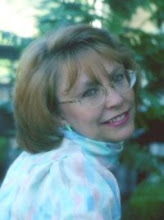
Please welcome Ashley Weaver, author of the Amory Ames mystery series and the exciting new Electra McDonnell historical mystery series. I will be reviewing her debut novel in the new Electra McDonnell series soon.
Ms. Weaver is also the Technical Services Coordinator for the Allen Parish Libraries in Louisiana. Weaver has worked in libraries since she was 14; she was a page and then a clerk before obtaining her MLIS from Louisiana State University. She lives in Oakdale, Louisiana.
How My New Series Was Born
A few years ago, I developed a fascination with World War II. I began reading several nonfiction books on the topic, everything from the Blitzkrieg to the SAS to the Navajo Code Talkers. It’s a subject that has innumerable facets to be explored, so many absolutely incredible rabbit holes to follow. I even read the riveting account of a serial killer operating in Occupied Paris!
It was while reading an excellent book by Ben Macintyre entitled Agent Zigzag, however, that I was inspired to write my own World War II tale. Agent Zigzag is the true story of Eddie Chapman, a petty criminal and sometime member of a safecracking gang, who ended up becoming a double agent for the British. I loved the idea of someone who was initially on the wrong side of the law using their talents for the Allies. I thought it would be especially interesting if that person was a woman. And so the idea for Electra McDonnell was born!
World War II proves a particularly good timeframe for the story of criminals with a code of honor. It was a time when everyone was pulling together to “do their bit” to stop Hitler and his armies. Whether it was victory gardens, creative rationing, scrap drives, or buying war bonds, people wanted to help in whatever ways they could. Having my character, Ellie, possess a skill set that is considered dishonest in peacetime but invaluable in a time of war creates an interesting dynamic. When she is asked to break into a safe to retrieve some important documents before they can be handed to the Nazis, she has the opportunity to help the war effort on a larger scale. Not only is she able to help the cause, which is something she genuinely wants to do, but she is also able to take pride in her work in a way that she hasn’t been able to before.
Researching for this book allowed me to take a close look at England—London in particular—at the start of WWII. The Blitz has not quite started in A Peculiar Combination, but I found that, even before the bombs began to fall, there was a sense of unity and shared purpose among the British people. As various countries fell before the advancing German army, it became increasingly vital that Great Britain prevail against the Nazi onslaught. The mindset of determination and resilience was something I tried to work into my characters. Even though Ellie and her military intelligence contact, Major Ramsey, come from completely different worlds, they are equally determined to do whatever necessary to stop the enemy from succeeding.
I also particularly enjoyed getting to research the art of safecracking for this book. It was fascinating for me to delve into the workings of locks and develop at least a basic understanding of the mechanisms and how they can be thwarted. I even bought a lockpicking set to practice with, though it will be a long time before I come anywhere close to Ellie’s level of skill!
~ ~ ~ ~ ~ ~ ~ ~ ~ ~ ~ ~
Thank you Ms. Weaver for your sharing a little of the behind the scenes of your new series. I'm looking forward to reviewing it since I too am fascinated by WWII history.
This week we have an interview with the author of the India Black historical espionage series, Carol Carr. I have reviewed two of the books in the series: India Black and the Shadows of Anarchy (click here) as well as India Black and the Widow of Windsor (click here.) Welcome Ms. Carr and thank you for the interview.
Why do you write? Do you love it or love having done it? What motivates you?
Many years ago I read a book that was so bad it made me think that I could write a better one. Ah, the arrogance of youth. I’d like that to be my excuse, but actually I was old enough to know better. Of course it’s not that easy to write a novel. I wrote one really bad novel, and then a less bad one, and finally produced the first India Black novel. (I have also learned a lesson in humility along the way, but that’s a different answer to a different question.) I will admit that I do not enjoy the writing process. After all, it’s work. But I do love the satisfaction of having completed a book that people enjoy reading. And that, in the end, is what motivates me: telling a story and hoping that people like it.
What is your routine when you're facing your next novel? Do you start your next mystery with the killer, the victim or a plot idea?
I generally have an idea for a plot, which is usually a topic that I’m interested in and want to know more about. It’s a great excuse to read more history. In the case of the third book, India Black and the Shadows of Anarchy, it was the history of the anarchist movement and its impact during the late Victorian era. I actually moved up the time frame a bit, as my book is set in 1877 and the anarchists didn’t really start blowing up people until a decade later, but why let the facts get in the way of the story? After settling on an idea, I’ll do research: Who were these anarchists? What were they trying to accomplish? How did they make their bombs? My reading usually generates characters. Many anarchists fled to England in the 1870’s because of pressure in their home countries. Hence I have Russians, Germans and French among my anarchists. The plot develops also as I read, but my plots are fairly simple. The emphasis is on action and character, though I do weave in a bit of mystery.
Do you outline the plot or some variation of that (a little/a lot of detail, a strict 3 act structure etc.) before sitting down and writing?
“I’m a plotter,” she confessed in a hushed tone. Yep, I work from a detailed outline. I do a shorter outline for my editor, but my working outline will have scraps of dialogue, character descriptions, settings, and all sorts of details in the margins. This works best for me. I’m a lawyer by training, so I prefer taking a logical approach to writing. Nothing would scare me more than to write without an outline. It would be like walking the high-wire without a net. With an outline in hand I know what each scene needs to accomplish and I’m free to use my imagination in the writing process as opposed to trying to figure out what comes next.
India Black is a memorable character who has had a tough life. What do you and troubled India have in common? How are you different?
Well, I’m a lawyer and she’s a prostitute. I leave you to draw your own conclusions. Aside from the similarities of our professions, India and I are quite alike in character. We’re both snarky. Neither of us cares much for authority. Nor do we care for do-gooders of any sort. We don’t want anyone telling us what to do, even if it’s for our own good. We’re both realists, we’re both cynical and we both tend to leap before we look. On the other hand, I am quite well-behaved and can be taken out safely in public. India is much more outspoken than I am, and she’s much harder. I have a marshmallow center. India does not.
India, French, Vincent and the rest of the cast are all great. What is your process for developing a character? Do you use pictures, a worksheet or just let the character(s) tell you about him/herself as you write? How do you handle minor characters?
India and Vincent sprang fully-formed into my mind. I have to work a bit harder at French as he’s a bit of a cypher, even to me. Sometimes I see him as a sort of super secret agent, and sometimes I can’t resist making him a bit buffoonish. I suppose that just reflects India’s ambivalence toward him. I use minor characters to support the story line, or to provide a foil to India and French. Minor characters never fail to surprise me. I started the second book knowing that India would be working for an elderly aristocrat. I was shocked when the Marchioness showed up and just took over. When I finished that book, I realized I couldn’t let her go. I had a similar experience with the third book. The character of Bonnaire started out as an entirely different sort of man. He just wouldn’t do as he was told. Finally, I gave in and let him be the character he wanted to be. I know, a writer is supposed to be in total control of her characters. Not so. They have minds of their own.
Do you have anything special you do before writing, particular music or a special room/location that helps you get in the zone and write?
I was probably the only kid in college who studied without any music in the background. I can’t write if it’s playing, either. I need total silence. I write in my office upstairs, sitting in a recliner bought expressly for the purpose, using a laptop. Occasionally, if the weather is nice, I write on the porch. I don’t have any rituals I have to follow and I don’t need anything special to work. The only mildly superstitious thing I do is to avoid reading historical mysteries when I’m writing. I wouldn’t want any outside influence showing up in my work.
What is your work schedule like when you're writing and how long does it take you to write a book?
My books are about 90,000 words in length, and when I’m in full flow I strive to write 2,000 words per day, five days per week. More than that, and my head explodes. This can take three hours if things are going really well, or six if they are not. I’ll use the time when I’m not writing to do odds and ends of research about issues that have popped up when I am writing. I can finish a first draft in 9-12 weeks, but then I’ll spend several weeks reading and re-reading. I hate proofing, but it’s critical.
Being a historical mystery, how much research goes into your work and do you complete that up front or "just enough" as you go?
I’m a history buff and Victorian England is a favorite period of mine. Consequently, I’m already familiar with the major events and people from the era. Once I’ve settled on the topic for the next India, I’ll do some specific reading. My local library is excellent in sourcing material for me. And I really appreciate the fact that they deliver books about bombs and prostitutes without blinking an eye. I also use the internet. How did people write historicals before the world wide web? I finish most of the research up front, but there’s always something that I need to know more about and don’t realize it until I’m writing.
Setting seems as important as the characters in your mysteries, how did you pick your setting and how do you like to interject a sense of place? Do you use places that you know well, have visited personally, or are familiar with for your settings?
I do try to evoke a strong sense of setting in the books. London was, and is, a character in and of itself. It is an endlessly fascinating place and must have been remarkably atmospheric during the 1870’s, with the fog, the smoke, the mass of unwashed humanity, the horse-drawn conveyances, the smell of the river. I have visited many of the places I write about, and I spend a lot of time with old maps and photographs, trying to visualize what England was like at that period, including odors and sounds.
What in your background prepared you to write not just mysteries, but historicals too?
I am captivated by history, and I’ve been a serious student of it for over forty years (oh, how I hate to write that bit). Mysteries are my other love. My grandmother kept a collection of Agatha Christie’s novels in her bookcase and I must have been about 9 or 10 when I started reading those. It seemed only logical to combine my two great reading passions when I started to write.
In literature (not your own) who is your favorite mystery/suspense character? Jane Marple, George Smiley, Jack Reacher, Tom Ripley. I could go on, but I’ll spare you an exhaustive list.
Which author has influenced or inspired you the most?
George MacDonald Fraser, who wrote a series of historical adventures about Harry Flashman, a womanizing, cowardly, drunken poltroon, who ended up playing a part in several important historical events and always came out smelling like a rose. I thought it would be fun to write a female character who did not fit the stereotype of the Victorian lady of quality.
How did you get your first break to getting published? Was it at a writer's conference or mailing a query letter?
Ye Olde Query Letter. I sent out about twenty, pitching the first India Black to a number of agents, and was lucky enough to find Ann Collette. She responded to the letter within a week, requesting a copy of the manuscript. Other agents were interested, but Ann worked fast and was a straight-shooter.
What's the one thing a reader has said that you've never forgotten and perhaps found startling? Hmmm. That’s probably a comment from a reader who took exception to India’s remarks about Queen Victoria’s weight in India Black and the Widow of Windsor. The reader said I must have issues with my own body image. Lighten up, honey. It was a joke.
If your India Black mysteries were to be made into a movie, who would you cast in your top character's roles? My first choice would be Emily Blunt, an English actress who has terrific comedic talent. She played Emily Charlton in The Devil Wears Prada.
Tell us your thoughts on the importance of historical mysteries and their popularity.
I think it’s easier to explain the appeal of mysteries: usually they end with justice being done and evil being punished and we like that. The historical element has added an additional dimension to the mystery genre and I’m very glad to see that. Some historical mysteries are factually accurate and some aren’t, but I think any story that sparks an interest in history is a good thing. More people should read history. Want to know the future? Read some history and look at the parallels with our own age.
Tell us about your next book in the series - or next project? What is your biggest challenge with it?
The fourth book in the series, tentatively titled India Black and the Gentleman Thief, is sitting on my editor’s desk, waiting to be read. I’m hoping that the big challenge was writing it, and not that the editor wants major changes. That book marks the end of my present contract. If a contract is offered for a fifth book, India, Vincent and French will be traveling to South Africa to sort out a little problem with the Zulus.
I’m also working on the outline of a thriller, and I’m writing a second India short story, which will be digitally published late this year or early next. The biggest challenge is always the same – plopping down in the chair and staring at a blank screen.
Do you have a newsletter or blog for readers to stay informed of your news? I do. I blog at http://therightwordintherightplace.blogspot.com. I talk a bit about writing, reading, publishing, extraordinary women and men, and rugby (my favorite sport).
~~~~~~~~~~~~~~~~
THANK You Carol for that great interview. Many fascinating tidbits. I love the humor about the similarities between yourself and India Black! I wish you continued success with the series and hope it enjoys a long run.
These should be everywhere vending machines are located
WELCOME to all the new members! Our anniversary giveaway and participation in Blogmania brought us many new members. I hope you enjoy this little spot in the blogosphere. So grab your cup of coffee and enjoy today's post.
We have a great interview with author Suzanne Arruda today! Read the review I did of her latest novel here. A little background information on her first.
She grew up in Greensburg, Indiana, attended Purdue University, worked part time at the local zoo, then became a laboratory technician at the University after graduation. She then moved to Kansas and received a masters degree in wildlife ecology and worked for Kansas Department of Wildlife and Parks in their Pratt museum, then as a research assistant on the Konza Prairie at Kansas State University. She also managed a job as a Biology instructor at Kansas State University. As if that weren't enough for a lifetime, she earned a Master’s in Education and taught middle and high school science.
But through it all she has been an explorer at heart. She was profoundly touched by Elsa the lioness in "Born Free" and she read the semi-autobiographical stories of African bush pilot Beryl Markham and explorers and cinematographers Osa and Martin Johnson. She then graduated into museum collector Roy Chapman Andrews whose exploits became the basis for Indiana Jones, Amazon explorer Col. Fawcett, African coffee farmer Isak Dinesen, and finally Peter Capstick, a modern big game hunter. (I did not know these authors before this - OH MY!) She has a lot squeezed into her life - now a great mystery series fueled by her explorer passion to crown it all.
Do you start your next mystery with the killer, the victim or a plot idea?
Yes! (or 'D' All of the above.) Actually, I have started with a location (Kilimanjaro) and in the research come up with a plot based on a legend, I've started with a villain, a crime, and also a plot based on a 1920 Nairobi newspaper notice. One takes inspiration where it comes and if it doesn't come, you go beating around the thicket until you scare it and it runs out in front of you.
Do you outline the plot or some variation of that (a little/a lot of detail, a strict 3 act structure etc) before sitting down and writing?
I do outline mainly because my publisher wishes to see a 12+ page synopsis before making a contract. And while I long for that "wander through the manuscript and just write" experience, that's actually harder than it sounds and I find the synopsis helps. BUT, I do digress from it, especially in the middle act (which is the hard part). Then, I do let scenes and characters suggest alternatives to my original plan. I still stick to the original ending (more or less)
What is your process for developing a character? Do you use pictures, a worksheet or just let the character(s) tell you about him/herself as you write?
I begin with a skeletal construct of a character - age, appearance, attitude, gender, and then stick them in a scene and see how they interact with others. Some end up 'running with scissors' and not playing well with others. Others turn out to have more interior fortitude than I'd originally thought. It's great fun to let the characters take hold and grow. It's much the same as when we were kids and invented characters in our role-playing games.
How do you find time for writing, what works for you - and do you have anything special you do before writing, particular music or a special room/location that helps you get in the zone and write?
Writing, at present, IS my job (and I'm a lousy housekeeper so I never let that interfere) so I have a lot of time for writing. I tend NOT to write with music. I can't hear my characters talk then. In fact, I find it distracting when anyone is home. My location is possibly not the best - the computer is in the front room right by the door, but I do like hearing the birds outside.
What is your work schedule like when you're writing and how long does it take you to write a book?
I try to keep a 9-4 work day and treat this professionally like any job. When I was teaching as well, I always had time set aside, devoted to writing. If you're serious about this, you have to plan and schedule the time. Of course, like any job, there are break periods which for me means feeding the kitty and checking on the flower beds briefly.
What in your background prepared you to write mystery novels?
READING! Writers should read read read read. Otherwise, I'm trained as a biologist and perhaps that analytical turn (problem solving - scientific method sort of thing) helps in thinking of crime solving.
How did you get your first break to getting published? Was it at a writer's conference or mailing a query letter?
I went to conferences where agents were running around loose. Actually, the first agent I applied to from a conference turned me down. But I discovered that just getting any agent is like going into a store and grabbing the first pair of pants you find. They may not fit in which case, you're no better off. Whether you find an agent via conference or by leg work looking to see who represents books similar to yours, It's important to find one that "fits" and believes in your work.
What are you currently reading?
I'm enjoying SANDI AULT'S "Jamaica WILD" mystery series set in the SW pueblo areas of Colorado. I'm alternaternating them with some very old H. Rider Haggard adventures.
What would you say is your interesting writing quirk?
Hmmm! This is a tough one. But I've been known to use small stuffed animals to represent characters and have them act out a more troublesome scene. Watching a small stuffed lion knife fight the 'pointy-headed boss' from Dilbert comics while a teddy bear pilot hurries in is ..... very odd - but helpful!
Do you participate in a critique group (or have you in the past?) What are the pros and cons of critique groups?
I don't have a critiquing group at present. I did belong to one when I began writing and was selling articles and kids short fiction but the group sort of disbanded. I have trouble finding a critiquing group where everyone is serious about writing rather than talking about writing. And I found that, often, the critique was more about punctuation rather than plot or construct. I know there are on-line groups, but I've gotten used to talking to the cat or (more usefully) bouncing some ideas off my husband.
If your Jade Del Cameron mysteries were to be made into a movie, who would you cast in your character's roles?
Back when I began writing Jade and my sons were then teenagers, THEY wanted Angelina Jolie to play Jade. Right now, I'm not sure but what I'd prefer an unknown to take her on or any of the other roles. But someone with FIRE for Jade.
Thank You Suzanne, especially for sharing your writing quirk - I love it!
* * * * * If you have enjoyed this blog, then PRETTY PLEASE vote for this blog as best Entertainment Blog (proving reading is entertainment) CLICK HERE and also as best Hobby Blog CLICK HERE. Thank you most sincerely. There are voting buttons on the sidebar too. You will have to register with Blogger's Choice, but it is a simple process. I am listed under Mysterysuspence.Blogspot.com. * * * * *
Winners of the Book Giveaway and Guest Reviewer spot are: Farm Fresh Murder goes to Stella (Ex Libris) , Til Dice Do Us Part goes to Pixie13, and Murder of the Wedding Belle goes to Debbie. Congratulations folks! I am really looking forward to your reviews of these books. You should have received an email from me requesting your mail addresses.
Today we have an extra special surprise...Jeri Westerson, author of the Medieval Mysteries starring Crispin Guest, is our guest blogger! Her books are phenomenal and I am sure you will enjoy her post. Please give a warm welcome to Jeri. And the crowd goes wild with applause and cheering.
Noir and hard-boiled fiction seem to be in Jeri Westerson’s blood. She was born and bred on the mean streets of Los Angeles. Reporter, would-be actress, graphic artist; these are the things she spent her time on before creating the newest hardboiled detective, Crispin Guest—ex-knight turned PI, solving crimes on the mean streets of fourteenth century London in her Medieval Noir series. The Boston Globe called her detective, “A medieval Sam Spade, a tough guy who operates according to his own moral compass.” Her 2008 debut, VEIL OF LIES, garnered nominations for the Macavity Award for historical mystery and the Shamus Award for Best First PI novel. Her second, SERPENT IN THE THORNS, is also a 2010 finalist for the Bruce Alexander Historical Mystery Award, and her third, THE DEMON’S PARCHMENT is due for release October 12.
In SERPENT IN THE THORNS, a simple-minded tavern girl stirs up trouble for ex-knight turned detective, Crispin Guest, when a body is found in her room, struck down by an arrow. Making matters worse, the murdered man was one of three couriers from France, transporting a religious relic with grave diplomatic implications. Now, as time runs out, Crispin must unravel the conspiracy behind the murder to save not only his country, but himself as well.
The Good, the Bad, the Ugly of Writing Historicals
By Jeri Westerson
Writing historical mysteries comes with its own set of problems. There’s already the problem of writing a mystery but on top of that is this layer of history swathed on like frosting. As with science fiction or fantasy, there is a certain amount of world-building that needs to happen, and by that I mean that the reader must be thoroughly placed in that time and place. The smells, the sounds, the feel of it all must be part of the prose without devolving into a travel log or documentary. Everything must be real for the characters and no one should seem out of place. And because readers of historical fiction and mysteries are very particular and have purposely stepped into your world to time travel, the history has got to be authentic.
But how does that work when you are writing a work of fiction to begin with?
I consider the history the skeleton of my story and the fiction—the fictional life of my ex-knight turned detective, Crispin Guest—the flesh and muscle I hang there. If the skeleton isn’t sound, that is, if it’s made of fictional history, then it doesn’t give enough structure to the rest of it. It’s also more of a challenge to bend the fiction to suit the history rather than the other way around.
But it can sometimes be frustrating. I try to choose the words I use to be authentic to the time period. I spend a lot of time with the Oxford English Dictionary to tell me when certain words first came into use, or at least were written down for the first time. This gives you a little leeway. After all, a word was most likely already in use for some time before it was actually written down. But the meanings of words have also changed. Some words we use today didn’t start out with quite that same meaning, and certain idiomatic phrases had a very early origin. In fact, there were instances when I wanted to use a word or phrase that was legitimate to the fourteenth century, but I ended up scrapping it because it sounded too modern!
Research, as you can imagine, is the most time-consuming part of the writing process. I do some initial research before I start to write so I can ground myself in what’s going on at the time, but even as I write there are constantly things that need to be addressed with further research. The real people who walk into the story must be investigated. An occupation or some point of politics must be gone over. And sometimes even weather or the phases of the moon play a role. In my latest, SERPENT IN THE THORNS, the plot is a medieval a thriller (or what I like to call my “ticking sundial” story) and my detective, with time running out, searches for an assassin who is trying to dispatch King Richard II with an arrow. So I had to research all aspects of archery which was actually an integral part of the lives of men in London during this time period.
How is this research accomplished? Plain old-fashioned book reading, which means a trip to my local university library. (And by the way, do not ignore those footnotes. I have found the best turns of plot in just the footnotes!)
Then there is the internet. I can contact people in archives across the pond to get information I need and sometimes I can simply Google something, like a cathedral floor plan, and it comes up! Gotta love the internet!
There’s hands on research, too. I have a collection of medieval weaponry, mostly daggers and a sword. How did it feel to wear these items, to use them? What do the clothes feel like? What does the food taste like? All of these things have to be done to really get a feel for the era.
I’ve often been asked if I would like to time travel back to England in the fourteenth century. And if I did have access to a time machine, I would certainly go back and step out. I’d love to really smell those streets and the people. I’d like to taste the food the way they cooked it rather than relying on the medieval recipes I have. I would like to see the shopkeepers and touch the wares they are selling. I’d like to eaves drop on conversations to hear the cadence of the language and how they used their words and how they pronounced them.
And then, I’d climb back in that time machine and go home, because I know how good we’ve got it here and how tough and foreign it was back there.
A novel is that time machine, at least for the readers. I like to let them walk around.
~ ~ ~ ~ ~ ~ ~ ~ ~ ~ ~ ~
Jeri Westerson does a lot of walking in her head when it comes to imagining the medieval streets of London for her medieval noir series. You can read an excerpt of her latest novel, SERPENT IN THE THORNS, at her website http://www.jeriwesterson.com/.
Crispin Guest has his own Facebook page, Myspace and a website dedicated to him. Check them all out.
Please leave comments and thank Jeri for her wonderful post.
* * * * * If you have enjoyed this blog, then PRETTY PLEASE vote for this blog as best Entertainment Blog (proving reading is entertainment) and also as best Hobby Blog. Thank you most sincerely. There are voting buttons on the sidebar too. You will have to register with Blogger's Choice, but it is a simple process. I am listed under Mysterysuspence.Blogspot.com. * * * * *
A warm welcome to each and every guest, grab a cup of your favorite hot beverage and join me. This is a blog for mystery, suspense, and thriller lovers.
Monday's: musings on the mystery genre, some author interviews, book giveaways, blog tours, mystery related games or trivia, even an occasional mystery/thriller movie review depending on what I scare up.
Julienne's ideal resort management career may come to an abrupt end when a celebrity pastor dies at the buffet table.
Nailed: Resort to Murder Mystery II
Julienne is snow bound in the middle of the Rocky Mountains with a killer striking at will.
SPIKED: Resort to Murder III
Julienne must solve the murder of a private investigator found with her business card on his dead body.
ARROWED: RESORT TO MURDER IV
It all began when a dying man with an arrow in his chest grabs her ankle.
The Little Wine Guide
Save the Libraries
Click to get involved
Importance of Libraries
Literary Quote
PRIVACY STATEMENT
Your privacy is important to us. To better protect your privacy, we provide this notice explaining our online information practices.
We do not share personal information with third-parties nor do we store information we collect about your visits to this blog for use other than what BLOGGER employs as the platform and host of this blog or STATCOUNTER uses to note visits to this blog and its pages.
If you participate in a giveaway and provide your email address for the contest, it is used only for the contest by the owner of this blog. But, the email is open to the public to see and I am not responsible for an other usage due to public display. We are not responsible for the republishing of content found on this blog on other web sites or media without our permission. This privacy policy is subject to change without notice.
I’m a Colorado gal who loves the mountains and low bug population but hates the snow and cold. I have been a book worm from second grade and my first venture into writing stories was fourth grade.
I love pretty much all mysteries and those with a paranormal angle in particular. I look forward to sharing my adventures in reading with you.