Showing posts with label Writing inspirations. Show all posts

Monday, July 11, 2011

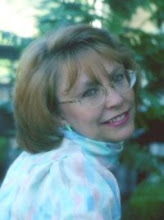
Author Interview: Toni Kelner

Today we have award winning author Toni Kelner joining us for an interview.  Ms. Kelner gives us a peek into her writing world and big news concerning her mystery series.  Please welcome Toni Kelner.


- Do you start your next mystery with the killer, the victim or a plot idea?

None of the above.  I start with the characters, usually the main character, and the milieu.  For Blast from the Past, I already had Tilda Harper from the previous books in the series, and I added in a movie production and comic books.  And a bit about kids' TV shows.

- Do you outline the plot or some variation of that (a little/a lot of detail, a strict 3 act structure etc) before sitting down and writing?

I outline only to order, which is to say if the editor requires one.  What I prefer to do is make a bunch of notes, and then as snippets of dialog and scenes come to me, I start putting them down.  When I've got enough snippets, I put them into a new file, order them appropriately, and start filling in the gaps.  It's not very strict organization, obviously.

- I enjoyed Tilda's character.  What is your process for developing a character? Do you use pictures, a worksheet or just let the character(s) tell you about him/herself as you write?

For a lot of the details, I just develop the character as I write, but I have to "hear" the character's voice before a story or novel comes to life for me.  I'll give an example.  I've just started work on a new series. I was intending to use a young woman character, possibly still in grad school.  So early twenties.  But I just couldn't hear her.  Then my editor suggested an older character, perhaps with a young teenaged daughter, and within a few hours, I could hear them both talking.  Then I came up with a background that fit that voice, using some of the bits I'd been trying to use before, only now they worked.  I don't know how tall she is or what color eyes she has or anything physical, but I'm not worried about that stuff.  It's the voice I need.

-  Do you have anything special you do before writing, particular music or a special room/location that helps you get in the zone and write?

I very rarely listen to music while I write.  Blame it on poor hearing combined with too many other people around.  I do have an office with a big desk to work at.  (My husband shares the office, but not the desk.  And definitely not the computer!)

About the only pre-work rituals I have are playing a game or three, either on the game site Neopets.com or on Facebook, and checking e-mail.  But it's hard to say if those are rituals or procrastination.

-  I found the topic of Comic Books and the culture around them fascinating.  What was your inspiration to use Comic books in the story?  What research did you do?

Why comic books?  I just like them.  I read comics as a kid, then picked them up again in college.  (One of my best friends and my then boyfriend were comics readers.)  My husband, daughters, and I like nothing better than a visit to one of our local comic book stores.  The store Tilda goes to--Million Year Picnic in Cambridge, MA--really exists, and the guy Tilda spoke to is the real owner.  (Which reminds me.  I should tell him he's in that book...) 

For research, I did some internet stuff and knew a bit already, but I got the nitty-gritty of indie comics publishing from my long-time friend Jerry Frazee, who published a comic called Nazrat back in the eighties.  (Jerry gets a shout-out in the book, too.)  He told me about the way pages were produced and how the contracts and such worked.

- What is your work schedule like when you're writing and how long does it take you to write a book?

At the beginning of a project, I have a prewriting period where I'm doing research, jotting down notes for scenes and dialog and such, and just getting that all-important voice clear in my head.  The length of prewriting time depends on whether it's a novel or a story, but I do need that time even for the shortest of stories.  Then when I get into first draft mode, I have a word goal per day to meet.  Usually it's around 1000 words a day, but that varies on how late I am on my deadline.  Once the first draft is done, I take a month or more for edits, and to get my beta readers' input.  All in all, it usually takes about 9 months for a novel, though this varies pretty widely.

You see, I'm the stay-at-home parent for two girls with a husband who travels a fair amount for business, and they keep my schedule in a constant state of flux.  As in, "Didn't I tell you I need that book for English tomorrow?" and "Can I have a play date with Liam at our house today?" and "You'll need to take the girls to school next week because I have to go to Berlin."

- What in your background prepared you to write mystery novels?

I guess it was being a technical writer, writing software documentation.  You start out with a mystery:  "What is this product and what does it do?"  You go around to the programmers and question them, just as if you were talking to suspects and witnesses.  Those programmers lie or omit things, just like suspects and witnesses would:  This feature will work by Tuesday, and we aren't going to change any of the field names.  Trust me."  And when it's all done, the result is a piece of fiction.

Otherwise, it's just a matter of loving to read mysteries.

-  Who is your favorite Mystery character? 

Oh, you ask the tough ones!  I'll go with Sherlock Holmes, though Archie Goodwin/Nero Wolfe, Amelia Peabody, and Lord Peter Wimsey are in there, too.

-  Which author has influenced or inspired you the most?

Another toughie, and one that's hard to answer.  Probably Robert Heinlein and Andre Norton.  Not so much in what or how I write, but they were the ones who introduced me to science fiction, which took up the greater part of my reading life for many years.  That lead to wanting to write.  Throw Isaac Asimov in there, too.  His introductory essays in The Early Asimov were the first things I read about writing.  Asimov gave the impression that he thought that if he could learn to write, anybody could.  I figured I was somebody...

The most visible influence those guys have on my writing is probably world-building.  I like writing about worlds-within-worlds:  comic books, movie making, carnivals, and so on.  That translates to my urban fantasy stuff, too.

In mysteries, I pay homage to Dorothy Sayers and Elizabeth Peters and Charlaine Harris and Barbara Paul and Margaret Maron and a never-ending cast of writers who give me inspiration and something to shoot for. 

- How did you get your first break to getting published?  Was it at a writer's conference or mailing a query letter?

The ubiquitous query letter.  I wrote the manuscript that evolved into Down Home Murder, and shopped it around for about a year.  Around the time I was about to give up and stick it in a trunk, the amazingly generous author Sarah Smith offered to read it for me and gave me twelve pages of suggestions.  I didn't take them all, but I did totally rewrite the manuscript.  Then I hit the query trail again, and got an agent with the sixteenth query letter.  (Though if you count the first round, she was actually number sixty.)

Though to be honest, I did publish poetry before that.  I had a dozen limericks published in DRAGON Magazine.

- What are you currently reading?

The Mother Hunt by Rex Stout.  I've read and reread all the Nero Wolfe books many times--they are so much fun.

- What would you say is your interesting writing quirk?

I don't write chronologically.  This confounds a lot of other mystery writers, who don't understand how I keep the plot straight in my head.  I think it comes from working with programmers who never developed a product in order.  I had to document what was working first, not what came first.  Similarly, I write what is working for me that day.


-  If your "Where Are They Now?" Mysteries were to be made into a movie, who would you cast in your character's roles?

As it happens, there is an option on the books for a series, and when I met with the producer holding that option, she asked me the same question.  And it was kind of embarrassing to admit that I have no clear idea.

My former agent once suggested Pauley Perrette, who plays Abby Sciuto on NCIS as a good Tilda, and I think she would do a fabulous job.

-  Do you have anything you would like to share about your next book in the series?

Actually, Blast from the Past will be the last in the "Where are they now?" series.  This is both bad and good. 

I really enjoyed writing about Tilda and there are so many more milieus I would like to have explored--I was thinking about voice actors for cartoon series and maybe a cult movie like Rocky Horror Picture Show next, and was hoping to go to Comic-Con and write it all off as research.  But the sales on the books weren't great, so...

The good news is that Berkley Prime Crime and I have just made a deal for "The Family Skeleton" series, in which itinerant college instructor Ruby returns to her family's home and has to confront the family skeleton.  Whose name is Sid.  Unlike most family skeletons, Sid is ambulatory and lives in the attic.  Ruby and Sid team up to solve Sid's murder.

This is all very early and preliminary--up until earlier this week, Ruby was named Georgia and worked as a locksmith--but I can definitely hear Sid talking to me!

~ ~ ~ ~ ~ ~ ~ ~ ~ ~ ~ ~ ~ ~ ~
Thank you Ms. Kelner. Great interview.

Oh my gosh - Blast from the Past is the last of the "Where Are They Now" mysteries!  I just got into the series and there are no more to look forward to. But, I will definitely be checking out the new series.

Great news on the option for a TV series - I am looking forward to it. I think Tilda would be great as a TV character.

I found this video featuring Toni as a back up singer along with Charlaine Harris.   Toni is the one with the yellow scarf.  They are called Blue Muse and The Boomettes seen here performing "My Babe" at Ground Zero Blues Club in Clarksdale, Mississippi at the release party for Delta Blues, a short story collection edited by Carolyn Haines.  What a hoot.  I had to share this gem!


Bookmark and Share

Monday, October 11, 2010

Author Interview - Rhys Bowen

I am excited and happy that Rhys Bowen has given an interview to Mysteries and My Musings!  She writes two mystery series that are each wonderful.  She writes the Molly Murphy and the Royal Spyness mysteries.  Check out the review of Last Illusion here and Royal Blood here.


 A little background about Ms. Bowen.  Rhys was born in Bath, England, of a Welsh/English family, and educated at London University. She worked for the BBC in London, as an announcer then drama studio manager. She sang in folk clubs with luminaries like Simon and Garfunkel and Al Stewart, and also started writing her own radio and TV plays.  She married and settled in the San Francisco area, where she has lived ever since, raising four children. (Although she now spends her winters in her condo in Arizona.)

- Do you start your next mystery with the killer, the victim or a plot idea?
Since I write two series currently they each start from a different point. The Molly Murphy books, set in 1900s New York City, usually start from an area of the city or a part of society I'd like to explore. Once I sent Molly undercover in the garment industry. Next time she's going into Chinatown. And the crime evolves from what she encounters there.
For my lighter Royal Spyness series about a minor royal in the 1930s the book starts with somewhere fun to send Georgie, somewhere that will make life really complicated for her, as well as something that ties in to real history. So, for example, in the latest, Royal Blood, I thought wouldn't it be fun if Georgie had to attend a royal wedding in Europe and it turned out to be in Transylvania and I could do the whole vampire spoof thing.
So I rarely know who is going to be killed when I start to write, and even more rarely know who the killer will be.


- Do you outline the plot or some variation of that (a little/a lot of detail, a strict 3 act structure etc) before sitting down and writing?

I start knowing almost nothing. I send my character into a situation and see what happens to her. I just follow along. This way I'm shocked and surprised when things go wrong for her. I'm not the puppet master jerking her strings, I'm her side-kick, viewing the action from behind the drapes. I think it makes for a much stronger book.


- What is your process for developing a character? Do you use pictures, a worksheet or just let the character(s) tell you about him/herself as you write?
I think creating character is like developing a friendship. When they first come on the page I know the essentials--how they look, what they are doing at this particular place and time, why I've introduced them to my story. It's like meeting someone at a cocktail party. They tell you the essential facts about them. If you enjoy the conversation you meet again and as a friendship develops gradually they reveal more about themselves. Thus by book four I've learned a lot more about my characters than I knew in book one. But I couldn't have arbitrarily created those facets of character. I had to find them out by watching that character in action and gradually becoming closer to her (or him).
 
This is the huge beneft of a series--we come to know a whole cast of characters really well.


- How do you find time for writing, what works for you - and do you have anything special you do before writing, particular music or a special room/location that helps you get in the zone and write?
I'm a professional writer and I write two books a year. Doctors don't have to get in the mood to examine patients. They do it every day. Pretty much the same for me. When I'm writing I write every day. I have a home office. I go to my computer with my morning cup of tea, read my emails and then start to revise what I wrote the day before and then start writing. Some days it flows easily, some days it doesn't, but I do not allow myself to leave until I've finished 5 pages a day. That way I know I can complete a first draft in the required period of time.


- What is your work schedule like when you're writing and how long does it take you to write a book?
As I mentioned I write two books a year. I try to block off three months for the actual writing. Both series require quite a lot of research as they are both historical. I do a lot of background reading before I'm ready to write, but then once I start writing I write every day until I have a first draft on paper. Then I revise, it goes to trusted readers and I get their imput, then final polish and off to publisher. This is fine unless I have agreed to too many speeches across the country during that three months (which I'm afraid I tend to do.)


- What in your background prepared you to write mystery novels?
I wanted to kill half my teachers in school! No, seriously, I've been a writer all my life, have always created fictitious worlds for myself and have always loved to read mysteries. I like the puzzle aspect, and I especially love the way the mystery can bring justice to the universe.  I also love the type of book that takes the reader to another place and time--hence the historical aspects.


- How did you get your first break toward getting published?  Was it at a writer's conference or mailing a query letter etc? 

Sorry, I've had a rather serendipitous career that just isn't typical. I started writing plays when I was with BBC drama in London. I took my first play to the head of drama. He said he liked it and they were going to produce it. Simple as that.
After a stint with ABC in Australia I married and found myself in California. Nothing like BBC drama, so I wrote a children's book. First publisher declined. Second accepted it and teamed me with famous illustrator. I published many books and some TV tie ins before I turned to crime, but by that time I had learned my craft and my agent had two competing bids on my first crime novel.


- What are you currently reading?
I just bought a Kindle today so I'm going to start by working my way through the complete Jane Austen. Then Connie Willis's Blackout. I've just re-read Harry Potter 7 as a comfort read as I rushed to finish my next book.


- What would you say is your interesting writing quirk?
 I can tell quite dark stories with humor without in any way making light of them. Laura Lippman once said of me, "Few writers create this mixture of light and dark." I see the humor in life, and I think I tell stories in a great first person voice.


- Do you participate in a critique group (or have you in the past?) What are the pros and cons of critique groups?
I have certain trusted people who read and comment on my books before they go to the publisher. Not a real critique group. I do think it helps to have more than one pair of eyes look at a manuscript before it goes out. We tend to overlook a lot of our own faults. There are two things against a critique group that I can see: they are too nice and never give true critiques so they don't hurt your feelings, or they tear it to shreds and take away your belief in yourself. Also they need to be your peers and to know what they are talking about.


* * * * * If you have enjoyed this blog, then PRETTY PLEASE vote for this blog as best Entertainment Blog (proving reading is entertainment) CLICK HERE and also as best Hobby Blog CLICK HERE. Thank you most sincerely. There are voting buttons on the sidebar too. You will have to register with Blogger's Choice, but it is a simple process. I am listed under Mysterysuspence.Blogspot.com. * * * * *


Bookmark and Share

Monday, September 13, 2010

Author Interview - Lauren Carr

Only a few days to out Blog Anniversary Celebration!  Be sure to come back and take part.


Today we welcome author Lauren Carr.  You can read the review I did of her latest novel here.  Lauren is a popular speaker who has made speaking appearances at schools, youth groups, and on author panels at conventions. She is also an active member of Sisters in Crime. She lives with her husband and son on a mountaintop in West Virginia. 


- Do you start your next mystery with the killer, the victim or a plot idea?

I have to say that I always start with the plot idea. Generally, it comes from a “What if…?” or a “Why would…?” scenario. It’s Murder, My Son sprang from an old episode of Unsolved Mysteries. It was the case of a woman found dead after years of being stalked. However, the police could never catch, or even identify, her stalker. Everyone, the police and her friends and family, said the victim admitted that she wasn’t telling them everything. Eventually, her secret got her killed. So, I started thinking, “What type of secret would someone keep even when they were being terrorized to death?” I kept working on that in my mind until I had a storyline for It’s Murder, My Son.

- Do you outline the plot or some variation of that (a little/a lot of detail, a strict 3 act structure etc) before sitting down and writing?

If I do an outline, it is very loose. Mostly, I make notes in order to sort things out in my mind. Ninety-five percent of the time, I won’t refer to the outline when writing out the book.

- What is your process for developing a character? Do you use pictures, a worksheet or just let the character(s) tell you about him/herself as you write?

The personality comes first. It is a given that certain types of personalities are capable of some things that others are not. The characters drive my storylines. It is not unusual for me to want to go one way with the story, only to get so far into the book and have a character drive it in a different direction.

I have a vision of all of my characters in my mind. Of course, since they are fiction, I don’t have pictures of them. Even Gnarly, the German shepherd in It’s Murder, My Son, has certain distinctive physical characteristics that make him unique in my head.

In my current work in progress, Old Loves Die Hard, there is a character with an outrageous personality, but I had trouble visualizing him. While we were on vacation this summer, I saw a man at a rest stop who appeared quite bizarre. As soon as I saw him, I knew he was this character that I had already developed for Old Loves Die Hard. Suddenly, I could see him. After we got home, I returned to the manuscript and gave that character this stranger’s physical description, which was a perfect match for his personality.

- How do you find time for writing, what works for you - and do you have anything special you do before writing, particular music or a special room/location that helps you get in the zone and write?

I have a writer’s studio in the top floor of our home. My husband built it for me after A Small Case of Murder came out.

I used to write early in the morning. It was the only time that I could be alone. But as my son has gotten older and more antisocial, I am able to write more after the sun comes up. I write about four hours a day. Two hours in the morning and two hours in the evening before I go to bed. During the day, I’ll work on marketing and promoting my books.

That something special to get me in the zone: Once I start thinking about the characters and the plot and the scenes, and then I’ll get there. Once I get in that zone, it’s hard to get me out.

- What is your work schedule like when you're writing and how long does it take you to write a book?

My work schedule varies. After I write a draft, I let it sit while I go onto to another project. That way, when I return to the draft, I can read it with fresh eyes. I’ll go through three drafts of a book before sending it to my perfect reader. Each draft takes approximately six weeks to complete. My perfect reader is my mother, who is an expert when it comes to murder mysteries. She reads them all. She used to read Perry Mason to me at bedtime. I almost always have revisions based on her recommendations. After that, the book will go to the editor, and then on into the publication process.

- What in your background prepared you to write mystery novels?

My dear sweet mother. She turned me on to Perry Mason, then Agatha Christie, and whodunits. That is something that we share. Neither my brothers nor sister share the love Mom and I have for murder.


- What would you say is your interesting writing quirk?

I have trouble deleting my work. As I go through drafts of my books, instead of deleting whole sections that I decide to do away with, I’ll cut and paste them into another document called Cut Scenes. I’m not totally crazy because there have been times when I have lifted a cut scene or two and used it in another project.

- I see you self published, what were the factors the made your mind up to go that route? Has your experience been positive going this route?

My first book, A Small Case of Murder, was self-published through iUniverse. At that time, I knew no one, and couldn’t get anyone to even read it. It was named finalist for the Independent Publisher Book Awards. Since I was self-published, I had to invest in and do all of the marketing and promotion for my book. I had to print up bookmarks, postcards, advertisements for book signings. I had to write and send out press releases to the media and set up interviews. I had to set up booksignings and book events. I had to pay for and do it all.

My second book, A Reunion to Die For, was traditionally published with Five Star Mystery. Even though I received an advance, I went through that and beyond in no time. Personally, I did all of the marketing and promotion. I had to print up bookmarks, postcards, advertisements for book signings. I had to write and send out press releases to the media and set up interviews. I had to set up booksignings and book events. I had to do it all.

Five Star Mystery had said they would take It’s Murder, My Son, but I chose not to go back to this publisher because they had done away with their paperback division. It is very hard to sell a $26 hardback when you’re an unknown. Another traditional publisher offered a contract for It’s Murder, My Son. I was tempted, but I kept coming back to the question, “Why do I need a traditional publisher? I had to do everything on my own when I was traditionally published as I did when I was self-published.”

By the time the traditional publisher and I came to a disagreement on the contract, it was very easy for me to say, “Thanks, but no thank you.”

It’s Murder, My Son has been through two editors. The cover is designed by the traditional audio publisher. I did the book’s interior layout design, something I have been doing professionally my whole adult life.

I independently published It’s Murder, My Son with CreateSpace, for the print version; DTP for the Kindle; and Smashwords for the other e-publication distributions. I have been very happy with the results and how well It’s Murder, My Son is doing. I will definitely continue with self-publishing.

A traditional audio publisher, Books-In-Motion released the audio version, including MP3 download. I have looked at Podio, but considering that I hate the sound of my own voice, I think I’ll stick with Books-In-Motion for the audio.

- Do you participate in a critique group (or have you in the past?) What are the pros and cons of critique groups?

No, I haven’t participated in any critique groups. I get an honest critique from my mother. I’ve heard different things about them, some positive, some negative. I guess it is a matter of getting in with a really good one.

- Do you have another book in this series planned? If so, please tell us a little about it.

Oh, yes, definitely. I am already working on Old Loves Die Hard. In this next installment of the Mac Faraday Mysteries, Mac returns to Georgetown when his wife becomes the prime suspect in the murder of the ADA, the man for whom she had divorced Mac.


* * * * * If you have enjoyed this blog, then PRETTY PLEASE vote for this blog as best Entertainment Blog (proving reading is entertainment) CLICK HERE and also as best Hobby Blog CLICK HERE. Thank you most sincerely. There are voting buttons on the sidebar too. You will have to register with Blogger's Choice, but it is a simple process. I am listed under Mysterysuspence.Blogspot.com. * * * * *


Bookmark and Share

Monday, December 21, 2009

Author Interview: Margaret Maron

I am overjoyed and deeply honored to have this interview with Margaet Maron.  Ms. Maron is a bestselling author and winner of the Edgar, Anthony, Agatha and Macavity awards.  She is a founding member and past president of Sisters in Crime and of the American Crime Writers' League, and a director on the national board for Mystery Writers of America.  Her works have been translated into a dozen languages and are on the reading lists of many college course in contemporary Southern literature.  You can read my review of her book, Sand Sharks here. Please give a warm welcome to Margaret Maron.


Do you start your next mystery with the killer, the victim or a plot idea?

I usually start by choosing the North Carolina setting where Judge Deborah Knott will be holding court, i.e., the landscape around her, whether she's in her home county, at the coast, or out in the mountains. I look at issues pertinent to her surroundings and then let the plot grow organically out of that setting and those issues..

Do you outline the plot or some variation of that (a little/a lot of detail - use a strict 3 act structure or not) before sitting down and writing?
I have never been able to outline. I wish I could, but the few times I've tried it, I overthink and wind up getting so bored that the story dies. I compare my style of writing to someone who lets loose a boxful of rabbits. Every rabbit is a character or plot point. I set them free and watch them scamper around for about 55,000 words, then I spend another 15,000 words getting them back into the box. I usually have no idea where they're going and am often delighted to see what briar patches they've wandered into, from which I must extricate them.

I love Judge Deborah Knott, what is your process for developing a character? Do you use pictures, a worksheet or just let the character tell you about him/herself as you write?
My characters seem to stroll into a scene or onto a page as they are needed. They are created out of necessity and whimsey. While they often arrive merely to further the plot, I usually get so interested in them or their backstories that I probably flesh them out more than is strictly necessary. After 16 books, I now have several hundred that I can tap to play a role and all of them are quite vivid in my mind. Deborah herself was created to be the direct antithesis of Lt. Sigrid Harald, NYPD, the protagonist of 8 earlier novels set against the New York art scene. I wanted to differentiate the two completely. Because Sigrid was a loner, I made Deborah gregarious. Because Sigrid was awkward in relationships, I made Deborah comfortable in her skin. Sigrid is an only child and has very few relatives, so Deborah has 11 older brothers and many nieces, nephews, aunts, uncles, and cousins. Because Sigrid was this, Deborah was that, etc. Readers often tell me that the two voices are so different they would never have guessed that both series were written by the same person.

How do you find time for writing - what works for you?
I discovered long ago that one makes time for what one wants to do and for what is important to that person. When it's time to write, I quit doing all the other stuff and just write. Because I'm not a morning person, I find that I accomplish my best writing between five p.m. and 1 a.m.

I read once that a romance writer would put on sexy lingerie to prepare for writing -
do you have anything special you do before writing, particular music or a special room/location that helps you get in the zone and write?
I'm not going to accuse that romance writer of saying something provocative just to interest her interviewer, but most of the writers I know go to their keyboards in pajamas, sweat pants, or a comfortable pair of jeans. Sexy lingerie? Oh, please! The writing doesn't happen for me until I'm sitting at a keyboard facing an empty screen that demands that I fill it with words. I don't have to work in a cork-lined room with absolute quiet, but I do concentrate better if I'm alone in a room with the door closed between me and whatever interesting that's happening beyond that door. I cannot write and listen to music though. The music gets between me and the screen.


I particularly enjoy how you create a sense of place. Setting seems as important as the characters in your mysteries, any tips on conveying a sense of place well?
Be specific. Don't say there are trees. "Trees" is generic. Are they pines? Palms? Mighty oaks or graceful dogwoods? Are the "roadside flowers" red poppies, blue asters, or goldenrod? Get away from the sense of sight and let your characters smell, taste, touch, and hear their surroundings.

What is on your bedside table to read?
Nothing. I fall asleep too quickly to read in bed. But on my breakfast table might be a history of everyday life in Rome, a classic mystery, a manuscript an editor has asked me to give a cover quote to, and of course a newspaper and some periodicals: The New Yorker, The Saturday Review of Literature, Newsweek, etc.

Can you recommend a fiction book that provides a great example of the writing craft to dissect and learn from?
Either The Franchise Affair or Brat Farrar, both by Josephine Tey. She puts you immediately into the scene and even her animals have personalities.

How did you get your first break towards getting published? Was it sending in a query or meeting an agent at a writing conference etc?
Dogged persistence. I began with short stories sent in "over the transom" and put up with a year of rejection until the then-editor of Alfred Hitchcock's Mystery Magazine bought one. Then two, and I was off to the races. After several years of short stories, I tried my hand at a novel and sent it to an agent that one of the magazine editors had recommended. He wasn't able to do much for me, but that book led to a second agent and finally, by a very circuitous path, to the agent I have now

Do you participate in a critique group (or have you in the past?) What are the pros and cons of critique groups?
No, I never have. When I began writing, I knew of no other writers, so I learned my craft on my own and never saw the point of them, therefore I can't give advice on their usefulness. I know that many writers swear by them, but I've heard that some groups are downright toxic. I've also heard that it's too easy to try to write to the group rather than to one's own sense of rightness, but I know none of this from personal experience.

THANK YOU Ms. Maron for this wonderful interview.  It has been a delight interviewing you and I look forward to your next books.
 
Until Thursday's next book review, I  wish you many mysterious moments and happy holidays.
Bookmark and Share

Monday, November 16, 2009

Author Interview: Juliet Blackwell

Today we have the accomplished author Juliet Blackwell's interview that she graciously agreed to do.  You can read the review I did of her last book "Secondhand Spirit" here.  Enjoy finding our more about this wonderful author.  Ms Blackwell also writes the Art Lovers Mystery series with her sister under the pseudonym of Hailey Lind.


You had written several books in a collaborative fashion with your sister, what are the good and bad sides to joint writing efforts?

The good part is always having someone to bounce ideas off of, and to tell you when you’re off track. My sister and I are good friends with a similar sense of humor, so sometimes when the mood’s right we really get each other laughing and coming up with ideas. The bad part is the constant need to re-write, and re-write again, since it’s so important to keep a single, unified “voice” in the narration. Plus, writing on my own means I get to go off on whatever tangent I like, or have the romance go the direction I want, without having to argue with my sister. Unlike me, of course, she can be so unreasonable…;-)

I loved Lily Ivory in Secondhand Spirits as well as Annie Kincaid in the Art Lover's series, what is your process for developing a character? Do you use pictures, a worksheet or just let the character tell you about him/herself as you write?


For me, developing character is the easiest—and most exciting-- part of writing. I love imagining the characters in different scenarios, how they would react, that sort of thing. I usually list their favorite food and drink, funny quirks, a few things like that on a piece of paper I keep for each one, but beyond that I just let them develop organically. I’m always shocked at how characters seem to fix themselves, and then tell me exactly what they would or wouldn’t do in a situation. Many’s the time I’ve had to change a storyline because my character simply wouldn’t do what I had planned for them to do. Sounds a little crazy, but it’s true.

Do you outline the plot or some variation of that (use a strict 3 act structure or not and little/alot of detail) before sitting down and writing?

I have to turn in an outline to my editor before writing, which forces me to think through certain plot points and storylines. But other than that, I’m more of an organic writer – I like to be taken by surprise by my own writing. If I try to stick too closely to an outline or formula, I find I get bored. And if I’m bored, I’m willing to bet my readers will be bored.

How do you find time for writing - what works for you?

This is a tough one. The simple answer is that there’s never enough time for writing. Just as there’s never enough time for so many things in our modern lives. But since writing is a priority for me, I make time. Most days I get up at four in the morning, believe it or not. I hate it (I am so NOT a morning person!) but it’s the only way I can find a couple of completely quiet hours to work without interruption. I also don’t watch television, which gives me extra time in the evenings. I never do more housework than absolutely necessary, and the garden has to get by with a minimum of intervention. I have a teenage son, so he takes priority over my writing, but otherwise the writing has to come before fun time with friends and that sort of thing. I try to keep some balance in my life, and do cherish my good friends, but by and large I guard my writing time jealously.

For your mystery series' there is a lot of detailed information - how much research goes into your work and do you complete that up front or "just enough" as you go?

I love research. I was trained as an anthropologist, and one of the reasons I love being a writer is that it gives me an excuse to read about interesting things every day! I just finished the fourth Art Lover’s book, Arsenic and Old Paint, and I learned all sorts of gruesome things about poisons, and also lots of details about bats.

I read constantly, and obviously use the internet for research. But I also do a lot of walking around neighborhoods where I set my stories, and I’ve interviewed FBI agents and bounty hunters and parole agents and medical examiners. With the Witchcraft series, I studied the history of the famous witch hunts in Europe and Salem, and about the persistence of witchcraft in parts of the modern world, especially in rural areas of Africa and Latin America. I also interviewed witches one-on-one, and attended coven meetings. And I get to do it all in the name of work!

As to how much…obviously, a writer can only include a small fraction of her or his research in the actual books – otherwise you run the risk of boring your reader. I usually do some research prior to writing, which gives me a lot of ideas. Then I research as I go along –sometimes it’s as simple as looking something up on Google, or sometimes it’s something I have to make time for (such as interviewing or walking the streets).

I read once that a romance writer would put on sexy lingere to prepare for writing - do you have anything special you do before writing, particular music or a special room/location that helps you get in the zone and write?

I really love writing in my office – boring, right? But I live in a beautiful old house full of ghosts, beautiful light, and wavy-glass windows, so it puts me in the mood for magic and art. I look out onto the hills of Oakland – which are truly beautiful, by the way. Very European looking. And my neighbor’s black cat, who just happens to be named Oscar (and I didn’t even know him when I named Lily’s familiar Oscar!) won’t leave me alone. He’s convinced I’ll fall for his feline ways…and he’s right. Having a black cat around makes writing about witches seem just right.

I also have a rather fierce –but cute—looking gargoyle who overhangs my computer monitor – he always makes me think I’m in the company of Oscar from the book.

Do you have any secrets to success for editing?

Hmm, that’s a tough one. I write my first draft with great verve and make myself turn off my internal editor – I want the story to flow without restraint—but that means that I have to do some serious re-writes and thorough editing once that first draft is done. For that, I think Stephen King said it best: you have to be willing to kill your darlings. Be tough on yourself – no matter how much you love a scene or iteration, if it doesn’t work for the story, cut it. Don’t give too much backstory, let the story unwind bit by bit to keep the reader intrigued. Use lots of dialogue to move the story along, and make sure you have a good mix of action, dialogue, and description throughout.

In this technology driven world there is more and more pressure on authors to use social media (blog book tours, twitter, facebook etc.) but what do you feel is the payoff for the amount of time invested as opposed to traditional methods such as brick and mortar book tours?

Wow, you really do ask the tough questions! I don’t know what the payoff is, and I wish I did. It’s so frustrating to spend so much time and energy in an arena that is so far removed from the ultimate goal –to sell books and introduce new readers to one’s work. So far no one has been able to show what the connection is, though as you say writers are expected to maintain a presence on the web. The only direct benefit I can see is that I get a lot of email from readers, and I imagine few of them would have taken the time and energy to write the old fashioned way.

I enjoy visiting bookstores, but obviously it’s expensive. My publisher doesn’t have the money to pay for my tour, so I do it on my own dime – however, I know so many great authors now that we often tour together, sharing expenses and making everything much more fun. It’s always a pleasure to meet booksellers and librarians face-to-face, and to interact with readers and fans. The only downside is that it’s truly exhausting, and does take away from writing – I always say “I’ll write in the evenings in the hotel”, but I usually wind up going out to dinner and drinks instead!

What is the "tipping point" where an author can support themselves from their writing? Is there a recognizable point at which you can dedicate yourself full time to writing books and not worry about a day job again?

I don’t know that there’s any one “tipping point” – the downside about being a published author is that unless you’re a HUGE name, you’re always having to look down the road to what’s next. Will I have a contract next year? Will it be enough to live on? Should I be changing genres? Supplementing my income? Maybe I should get a job at Peet’s Coffee….

Much of it, obviously, depends on your personal situation and expectations. I’ve been a professional artist for years, and before that I was a social worker, and before that an anthropologist. So frankly, I’ve never made much money! My demands are low, I live with housemates to share expenses, so I don’t need as much as other people might. I’d much rather have an interesting, rewarding career than a new car or fancy vacations…and I’m lucky, because my ex-husband is able to pay for our son’s school and important, mundane, things like his health insurance and new shoes.

A lot of authors supplement their writing wages through freelancing non-fiction, teaching classes, or sympathetic spouses. But I’m not sure that many of us are able to “not worry about a day job again” ever!

Can you recommend a fiction book that provides a great example of the writing craft to dissect and learn from?

Wow – in this case there are far too many answers to your question. I adore Richard Russo – his Empire Falls is a masterpiece in interweaving the story of individuals, families, and a whole town, as well as handling flashbacks and historical information. Nick Hornby is a master of using “voice” to establish character, almost without using description at all – try About a Boy or A Long Way Down. My friend Sophie Littefield’s debut novel, A Bad Day for Sorry, is another example of a strong, clear voice of character. Elizabeth Peter’s novels are wonderful examples of storytelling beyond a lot of modern conventions – she can write an entire mystery novel without actually killing anyone. Amazing.

How did you get your first break towards getting published? Was it sending in a query or meeting an agent at a writing conference etc?

I did go to a conference – the Willamette Valley Writers’ Conference in Portland, Oregon—and credit that wonderful event with meeting agents and editors for the very first time. I didn’t get an actual agent from that event, but I did learn what it was they were looking for, as well as important things like how to write a decent query letter. After that, I did a lot of research on the web for lists of agents, as well as looking through Jeff Herman’s guide to publishers. I had a goal of sending out 100 letters, hoping for a ten percent return. I only got up to 38, but out of that we received three offers for Feint of Art, which was later nominated for an Agatha.

Now I am President of our Northern California chapter of Sisters in Crime, and a member of Mystery Writers of America, so I realize there was a whole lot of support out there that I was unaware of – our Sisters in Crime chapter has ushered many aspiring authors through the process, recommending them to our agents and helping with the query letter process. Several are now published authors! Look around you for writers’ groups – they’re wonderful and willing to help!


Tell us about your upcoming book! What aspect of the new book did you particularly enjoy?

My next book will be A Cast-off Coven, the second in the Witchcraft Mystery Series (June 2010). I really enjoyed writing about the characters I established in the first book, plus adding in a few more. I researched a lot about ghosts for this book, and found some fascinating tidbits about the different way people view spectral beings. I also researched demons – a scary lot.

Arsenic and Old Paint will also be out next summer, either August or September. This will be the fourth in the Annie Kincaid Art Lover’s Mystery series, and it was so much fun to research – I spent a lot of time in Chinatown looking into rumors of underground chambers and tunnels. I also particularly enjoyed writing this one, because I got to come back to characters that I love, and which I haven’t been able to write about lately.

THANK YOU so much Juliet for this interview.  I am certainly looking forward to your next books with much anticipation!
 
Until Thursday and our next book review, I wish you dear readers many mysterious moments.
Bookmark and Share

Monday, September 7, 2009

Mystery Family Tree - Debut

First, I wish you a great labor day.  Are you enjoying the last of the warm weather with a picnic or grilling?  Smelling the air for any hints of autumn arriving and feeling the change of the season creeping up on us?

Secondly, welcome to the debut of Mysteries and My Musings Blog!  I had put off doing a blog - the idea of a blog made me feel so exposed.  But I am taking the plunge now and am a bit giddy over my premier issue.  I truly hope you like it.

I am using this blog to also keep myself accountable in the writing of my suspense novel.  The working title is The Society and I am  6783 words into it.  I wrote approximately 870 words last week.  I will report in next Monday with how many words I write this coming week.

Now on to the main topic.  After tossing and turning over what my very first blog should be about, I finally settled on my family tree - my mystery family tree that is.

My Mystery Family Tree


It is important to know your roots, your heritage, the stock you are descended from, even as an author. The Mystery Family Tree in my case. There is a sense of completeness in knowing where you come from. As the saying goes “If you know whence you came, there are absolutely no limitations to where you can go.” So as a mystery author what legacy have I inherited, where did I come from?

Every family has the kooky member, the loud drunk, the embarrassing black sheep and even the uptight buttoned-up stuffed shirt. But when we start talking about a mystery family tree anything can surface! Have you ever noticed that families can disagree among themselves, but don't anybody else attack or disparage somebody in the family? With that in mind, I am giving you a peek inside my family with some trepidation.

Many mystery aficionados already know that Edgar Allan Poe is considered the father of mystery fiction. It is no different in my case. Thanks Dad, you have left a tough reputation for all your children to live in the shadow of. The “locked room” puzzle moved mystery into an exploration of the criminal mind. Father Poe (this is perhaps the only public figure that it feels odd to not use the full name when referencing) challenged his progeny to make the mystery not only a good tale but a brainy ride.

If Poe is the father of my mystery family then Dame Agatha Christie is my mother. Ms. Christie gave to me the cozy style mystery with the beloved Miss Marple. Hercules Poirot is equally as important and everlasting with his exotic ways and “consultant” status. I still stumble over how to pronounce his name after all these years of practice!  The gene pool got quite an infusion from Mother. I am forever thankful and somewhat in awe of her talent. 

Anna Katherine Green “The Leavenworth Case” (1878) was the first woman to write a detective novel. I honor and bow to Ms Green, my predecessor. Before Dame Agatha ever set pen to paper Anna Green charted new territory for women. She was a pioneer, a bestseller, and wrote forty books in her time. She left a tremendous legacy for a woman in the late 1800s in a male dominated industry. I see her as my older sister who blazed some rough trails before me. The younger sibling always benefits from the efforts of the older brothers and sisters! Thank you so much Anna, big kiss.

Most everyone has heard of Father Poe and Mother Christie, a few may have heard of Anna Green.  But they were not the authors who took hold of me when I was young and made me a true mystery child. You know how it goes, kids don’t appreciate Mom and Dad until they mature and older sisters are hard to live up to. Phyllis A Whitney is the favorite aunt of my Mystery heritage. I devoured her books. She received the Mystery Writers of America Grand Master award in 1988 and wrote for both teens and adults. I could read two or three Nancy Drew/Hardy Boys/Three Investigators a day, but I savored Ms Whitney’s books like premium chocolate milk or a hard earned Little Debbie.

The Secret of Haunted Mesa, The Secret of the Spotted Shell and Step to the Music are still in my memory. Visit Phyllis A Whitney’s official website for a listing of her books (http://www.phyllisawhitney.com) if you wish to be nostalgic. Looking over the young adult book covers is somewhat like rummaging through a box of old family photos – look at those clothes! Did they really style their hair that way – on purpose? Like a favorite aunt, she heavily influenced my view of the mystery world. She spoiled me with a taste for the gothic touch and heart-pounding suspense.

I have a favorite uncle as well, Ellery Queen. I confess that I first was introduced to Ellery through the old television shows starring Jim Hutton then read the books. This amiable and likable sleuth won me over. As uncles go he was fun, fascinating and quirky.

Some family members I am closer to than others and some I need at certain times. When I have had a hard day who do I turn to? A cozy sister or two just takes the edge off. They are comforting with a cup of tea. I can throw myself into their world with their wacky neighbors and friends and tension just disappears - like some of their acquaintances!

But when I want to spice up my life, need to feel my blood pumping a bit there is nothing better than a visit with a suspense black sheep member. They are always walking with danger and flirting with bad influences. Family reunions are never dull with these guys around. James Patterson and Dan Brown are the successful black sheep cousins that the family is talking about. Whispers of “I heard they got a huge advance and are already talking a movie deal!” can be heard. But Jeffery Deaver is the quiet one that I sit in the corner with talking.  He tells me stories I can't get out of my head.  How much have these black sheep shaped this little mystery child's psyche other than just with a smidge of envy? I have learned from them and taken away what lessons applied to me. Shhhh, don’t let on I have taken any lessons from such rapscallions.

There are a few family members that I only talk about in hushed whispers. They are the brothers and sisters who...you know...see and hears things the rest of us don't. The paranormal members of the family are fascinating and I can't get enough of them. I have heard it said they were left on the doorstep late one night or that they are changelings the faeries have swapped babies with. But no matter – they are part of my big family now and I love them and spend plenty of time getting to know them.

Growing up their have been many friends that have shaped my mystery life and view. Mary Higgins Clark was a positive influence, the kind that parents approve of to drive to the movies. James D Doss and Tony Hillerman expanded my universe like college classmates do. Hillerman/Doss were more like brothers to me. I mourned when I and every other mystery child lost Tony.

Now I have multitudes of associates, friends and co-workers in the mystery world and they continue to challenge me and expand my mystery world, enriching my life.

I am sure I am not the only one with a rich mystery family tree. Please take a moment to share. Who was your favorite aunt or uncle or maybe the black sheep who influenced you as a young person?  Who were the “friends” that started expanding your mystery universe?

Thank you for visiting this blog – I am grateful for your stopping by and spending some time with me. See you Thursday for a book review.   I wish you many mysterious moments until them.

Bookmark and Share