Showing posts with label writing instructions. Show all posts

Monday, December 21, 2009

Author Interview: Margaret Maron

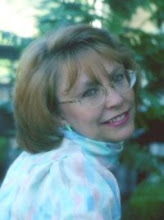
I am overjoyed and deeply honored to have this interview with Margaet Maron.  Ms. Maron is a bestselling author and winner of the Edgar, Anthony, Agatha and Macavity awards.  She is a founding member and past president of Sisters in Crime and of the American Crime Writers' League, and a director on the national board for Mystery Writers of America.  Her works have been translated into a dozen languages and are on the reading lists of many college course in contemporary Southern literature.  You can read my review of her book, Sand Sharks here. Please give a warm welcome to Margaret Maron.


Do you start your next mystery with the killer, the victim or a plot idea?

I usually start by choosing the North Carolina setting where Judge Deborah Knott will be holding court, i.e., the landscape around her, whether she's in her home county, at the coast, or out in the mountains. I look at issues pertinent to her surroundings and then let the plot grow organically out of that setting and those issues..

Do you outline the plot or some variation of that (a little/a lot of detail - use a strict 3 act structure or not) before sitting down and writing?
I have never been able to outline. I wish I could, but the few times I've tried it, I overthink and wind up getting so bored that the story dies. I compare my style of writing to someone who lets loose a boxful of rabbits. Every rabbit is a character or plot point. I set them free and watch them scamper around for about 55,000 words, then I spend another 15,000 words getting them back into the box. I usually have no idea where they're going and am often delighted to see what briar patches they've wandered into, from which I must extricate them.

I love Judge Deborah Knott, what is your process for developing a character? Do you use pictures, a worksheet or just let the character tell you about him/herself as you write?
My characters seem to stroll into a scene or onto a page as they are needed. They are created out of necessity and whimsey. While they often arrive merely to further the plot, I usually get so interested in them or their backstories that I probably flesh them out more than is strictly necessary. After 16 books, I now have several hundred that I can tap to play a role and all of them are quite vivid in my mind. Deborah herself was created to be the direct antithesis of Lt. Sigrid Harald, NYPD, the protagonist of 8 earlier novels set against the New York art scene. I wanted to differentiate the two completely. Because Sigrid was a loner, I made Deborah gregarious. Because Sigrid was awkward in relationships, I made Deborah comfortable in her skin. Sigrid is an only child and has very few relatives, so Deborah has 11 older brothers and many nieces, nephews, aunts, uncles, and cousins. Because Sigrid was this, Deborah was that, etc. Readers often tell me that the two voices are so different they would never have guessed that both series were written by the same person.

How do you find time for writing - what works for you?
I discovered long ago that one makes time for what one wants to do and for what is important to that person. When it's time to write, I quit doing all the other stuff and just write. Because I'm not a morning person, I find that I accomplish my best writing between five p.m. and 1 a.m.

I read once that a romance writer would put on sexy lingerie to prepare for writing -
do you have anything special you do before writing, particular music or a special room/location that helps you get in the zone and write?
I'm not going to accuse that romance writer of saying something provocative just to interest her interviewer, but most of the writers I know go to their keyboards in pajamas, sweat pants, or a comfortable pair of jeans. Sexy lingerie? Oh, please! The writing doesn't happen for me until I'm sitting at a keyboard facing an empty screen that demands that I fill it with words. I don't have to work in a cork-lined room with absolute quiet, but I do concentrate better if I'm alone in a room with the door closed between me and whatever interesting that's happening beyond that door. I cannot write and listen to music though. The music gets between me and the screen.


I particularly enjoy how you create a sense of place. Setting seems as important as the characters in your mysteries, any tips on conveying a sense of place well?
Be specific. Don't say there are trees. "Trees" is generic. Are they pines? Palms? Mighty oaks or graceful dogwoods? Are the "roadside flowers" red poppies, blue asters, or goldenrod? Get away from the sense of sight and let your characters smell, taste, touch, and hear their surroundings.

What is on your bedside table to read?
Nothing. I fall asleep too quickly to read in bed. But on my breakfast table might be a history of everyday life in Rome, a classic mystery, a manuscript an editor has asked me to give a cover quote to, and of course a newspaper and some periodicals: The New Yorker, The Saturday Review of Literature, Newsweek, etc.

Can you recommend a fiction book that provides a great example of the writing craft to dissect and learn from?
Either The Franchise Affair or Brat Farrar, both by Josephine Tey. She puts you immediately into the scene and even her animals have personalities.

How did you get your first break towards getting published? Was it sending in a query or meeting an agent at a writing conference etc?
Dogged persistence. I began with short stories sent in "over the transom" and put up with a year of rejection until the then-editor of Alfred Hitchcock's Mystery Magazine bought one. Then two, and I was off to the races. After several years of short stories, I tried my hand at a novel and sent it to an agent that one of the magazine editors had recommended. He wasn't able to do much for me, but that book led to a second agent and finally, by a very circuitous path, to the agent I have now

Do you participate in a critique group (or have you in the past?) What are the pros and cons of critique groups?
No, I never have. When I began writing, I knew of no other writers, so I learned my craft on my own and never saw the point of them, therefore I can't give advice on their usefulness. I know that many writers swear by them, but I've heard that some groups are downright toxic. I've also heard that it's too easy to try to write to the group rather than to one's own sense of rightness, but I know none of this from personal experience.

THANK YOU Ms. Maron for this wonderful interview.  It has been a delight interviewing you and I look forward to your next books.
 
Until Thursday's next book review, I  wish you many mysterious moments and happy holidays.
Bookmark and Share

Monday, November 16, 2009

Author Interview: Juliet Blackwell

Today we have the accomplished author Juliet Blackwell's interview that she graciously agreed to do.  You can read the review I did of her last book "Secondhand Spirit" here.  Enjoy finding our more about this wonderful author.  Ms Blackwell also writes the Art Lovers Mystery series with her sister under the pseudonym of Hailey Lind.


You had written several books in a collaborative fashion with your sister, what are the good and bad sides to joint writing efforts?

The good part is always having someone to bounce ideas off of, and to tell you when you’re off track. My sister and I are good friends with a similar sense of humor, so sometimes when the mood’s right we really get each other laughing and coming up with ideas. The bad part is the constant need to re-write, and re-write again, since it’s so important to keep a single, unified “voice” in the narration. Plus, writing on my own means I get to go off on whatever tangent I like, or have the romance go the direction I want, without having to argue with my sister. Unlike me, of course, she can be so unreasonable…;-)

I loved Lily Ivory in Secondhand Spirits as well as Annie Kincaid in the Art Lover's series, what is your process for developing a character? Do you use pictures, a worksheet or just let the character tell you about him/herself as you write?


For me, developing character is the easiest—and most exciting-- part of writing. I love imagining the characters in different scenarios, how they would react, that sort of thing. I usually list their favorite food and drink, funny quirks, a few things like that on a piece of paper I keep for each one, but beyond that I just let them develop organically. I’m always shocked at how characters seem to fix themselves, and then tell me exactly what they would or wouldn’t do in a situation. Many’s the time I’ve had to change a storyline because my character simply wouldn’t do what I had planned for them to do. Sounds a little crazy, but it’s true.

Do you outline the plot or some variation of that (use a strict 3 act structure or not and little/alot of detail) before sitting down and writing?

I have to turn in an outline to my editor before writing, which forces me to think through certain plot points and storylines. But other than that, I’m more of an organic writer – I like to be taken by surprise by my own writing. If I try to stick too closely to an outline or formula, I find I get bored. And if I’m bored, I’m willing to bet my readers will be bored.

How do you find time for writing - what works for you?

This is a tough one. The simple answer is that there’s never enough time for writing. Just as there’s never enough time for so many things in our modern lives. But since writing is a priority for me, I make time. Most days I get up at four in the morning, believe it or not. I hate it (I am so NOT a morning person!) but it’s the only way I can find a couple of completely quiet hours to work without interruption. I also don’t watch television, which gives me extra time in the evenings. I never do more housework than absolutely necessary, and the garden has to get by with a minimum of intervention. I have a teenage son, so he takes priority over my writing, but otherwise the writing has to come before fun time with friends and that sort of thing. I try to keep some balance in my life, and do cherish my good friends, but by and large I guard my writing time jealously.

For your mystery series' there is a lot of detailed information - how much research goes into your work and do you complete that up front or "just enough" as you go?

I love research. I was trained as an anthropologist, and one of the reasons I love being a writer is that it gives me an excuse to read about interesting things every day! I just finished the fourth Art Lover’s book, Arsenic and Old Paint, and I learned all sorts of gruesome things about poisons, and also lots of details about bats.

I read constantly, and obviously use the internet for research. But I also do a lot of walking around neighborhoods where I set my stories, and I’ve interviewed FBI agents and bounty hunters and parole agents and medical examiners. With the Witchcraft series, I studied the history of the famous witch hunts in Europe and Salem, and about the persistence of witchcraft in parts of the modern world, especially in rural areas of Africa and Latin America. I also interviewed witches one-on-one, and attended coven meetings. And I get to do it all in the name of work!

As to how much…obviously, a writer can only include a small fraction of her or his research in the actual books – otherwise you run the risk of boring your reader. I usually do some research prior to writing, which gives me a lot of ideas. Then I research as I go along –sometimes it’s as simple as looking something up on Google, or sometimes it’s something I have to make time for (such as interviewing or walking the streets).

I read once that a romance writer would put on sexy lingere to prepare for writing - do you have anything special you do before writing, particular music or a special room/location that helps you get in the zone and write?

I really love writing in my office – boring, right? But I live in a beautiful old house full of ghosts, beautiful light, and wavy-glass windows, so it puts me in the mood for magic and art. I look out onto the hills of Oakland – which are truly beautiful, by the way. Very European looking. And my neighbor’s black cat, who just happens to be named Oscar (and I didn’t even know him when I named Lily’s familiar Oscar!) won’t leave me alone. He’s convinced I’ll fall for his feline ways…and he’s right. Having a black cat around makes writing about witches seem just right.

I also have a rather fierce –but cute—looking gargoyle who overhangs my computer monitor – he always makes me think I’m in the company of Oscar from the book.

Do you have any secrets to success for editing?

Hmm, that’s a tough one. I write my first draft with great verve and make myself turn off my internal editor – I want the story to flow without restraint—but that means that I have to do some serious re-writes and thorough editing once that first draft is done. For that, I think Stephen King said it best: you have to be willing to kill your darlings. Be tough on yourself – no matter how much you love a scene or iteration, if it doesn’t work for the story, cut it. Don’t give too much backstory, let the story unwind bit by bit to keep the reader intrigued. Use lots of dialogue to move the story along, and make sure you have a good mix of action, dialogue, and description throughout.

In this technology driven world there is more and more pressure on authors to use social media (blog book tours, twitter, facebook etc.) but what do you feel is the payoff for the amount of time invested as opposed to traditional methods such as brick and mortar book tours?

Wow, you really do ask the tough questions! I don’t know what the payoff is, and I wish I did. It’s so frustrating to spend so much time and energy in an arena that is so far removed from the ultimate goal –to sell books and introduce new readers to one’s work. So far no one has been able to show what the connection is, though as you say writers are expected to maintain a presence on the web. The only direct benefit I can see is that I get a lot of email from readers, and I imagine few of them would have taken the time and energy to write the old fashioned way.

I enjoy visiting bookstores, but obviously it’s expensive. My publisher doesn’t have the money to pay for my tour, so I do it on my own dime – however, I know so many great authors now that we often tour together, sharing expenses and making everything much more fun. It’s always a pleasure to meet booksellers and librarians face-to-face, and to interact with readers and fans. The only downside is that it’s truly exhausting, and does take away from writing – I always say “I’ll write in the evenings in the hotel”, but I usually wind up going out to dinner and drinks instead!

What is the "tipping point" where an author can support themselves from their writing? Is there a recognizable point at which you can dedicate yourself full time to writing books and not worry about a day job again?

I don’t know that there’s any one “tipping point” – the downside about being a published author is that unless you’re a HUGE name, you’re always having to look down the road to what’s next. Will I have a contract next year? Will it be enough to live on? Should I be changing genres? Supplementing my income? Maybe I should get a job at Peet’s Coffee….

Much of it, obviously, depends on your personal situation and expectations. I’ve been a professional artist for years, and before that I was a social worker, and before that an anthropologist. So frankly, I’ve never made much money! My demands are low, I live with housemates to share expenses, so I don’t need as much as other people might. I’d much rather have an interesting, rewarding career than a new car or fancy vacations…and I’m lucky, because my ex-husband is able to pay for our son’s school and important, mundane, things like his health insurance and new shoes.

A lot of authors supplement their writing wages through freelancing non-fiction, teaching classes, or sympathetic spouses. But I’m not sure that many of us are able to “not worry about a day job again” ever!

Can you recommend a fiction book that provides a great example of the writing craft to dissect and learn from?

Wow – in this case there are far too many answers to your question. I adore Richard Russo – his Empire Falls is a masterpiece in interweaving the story of individuals, families, and a whole town, as well as handling flashbacks and historical information. Nick Hornby is a master of using “voice” to establish character, almost without using description at all – try About a Boy or A Long Way Down. My friend Sophie Littefield’s debut novel, A Bad Day for Sorry, is another example of a strong, clear voice of character. Elizabeth Peter’s novels are wonderful examples of storytelling beyond a lot of modern conventions – she can write an entire mystery novel without actually killing anyone. Amazing.

How did you get your first break towards getting published? Was it sending in a query or meeting an agent at a writing conference etc?

I did go to a conference – the Willamette Valley Writers’ Conference in Portland, Oregon—and credit that wonderful event with meeting agents and editors for the very first time. I didn’t get an actual agent from that event, but I did learn what it was they were looking for, as well as important things like how to write a decent query letter. After that, I did a lot of research on the web for lists of agents, as well as looking through Jeff Herman’s guide to publishers. I had a goal of sending out 100 letters, hoping for a ten percent return. I only got up to 38, but out of that we received three offers for Feint of Art, which was later nominated for an Agatha.

Now I am President of our Northern California chapter of Sisters in Crime, and a member of Mystery Writers of America, so I realize there was a whole lot of support out there that I was unaware of – our Sisters in Crime chapter has ushered many aspiring authors through the process, recommending them to our agents and helping with the query letter process. Several are now published authors! Look around you for writers’ groups – they’re wonderful and willing to help!


Tell us about your upcoming book! What aspect of the new book did you particularly enjoy?

My next book will be A Cast-off Coven, the second in the Witchcraft Mystery Series (June 2010). I really enjoyed writing about the characters I established in the first book, plus adding in a few more. I researched a lot about ghosts for this book, and found some fascinating tidbits about the different way people view spectral beings. I also researched demons – a scary lot.

Arsenic and Old Paint will also be out next summer, either August or September. This will be the fourth in the Annie Kincaid Art Lover’s Mystery series, and it was so much fun to research – I spent a lot of time in Chinatown looking into rumors of underground chambers and tunnels. I also particularly enjoyed writing this one, because I got to come back to characters that I love, and which I haven’t been able to write about lately.

THANK YOU so much Juliet for this interview.  I am certainly looking forward to your next books with much anticipation!
 
Until Thursday and our next book review, I wish you dear readers many mysterious moments.
Bookmark and Share

Monday, October 12, 2009

Best Lessons For Writers: As Close as a Great Book


First a quick note on my writing progress for my suspense novel "The Society", I have only gotten a mere 1000 words in the last two weeks. But there is always the coming week!


When I first started taking my writing seriously, I began reading many books on writing out there. This was a number of years ago and life put my writing dreams on hold (a nasty divorce and moved several times etc.) But even wayyyyyy back then, one book on writing romances (which was not my genre but had great advice) said to learn from the books you like by picking them apart. It is a different way of looking at the books you love. In that book the aspiring writer was encouraged to do a book report on ten books within your chosen genre in which you included chapter length, openings, chapter transitions, tension between characters and so forth.

This thought from some long forgotten book has resurfaced lately. In 2007 Francine Prose published the book Reading Like a Writer that draws us back to great literature to learn the craft from some of the best. This book teaches you to study each word, then sentence and finally paragraphs in order to learn fine narration, character, dialogue, details, and gesture in writing. The book draws examples from Dostoyevsky, Flaubert, Kafka, Austen, Dickens, Woolf, Checkhos, Philip Roth, Isaac Babel, George Eliot, John Le CarrĂ©, Flannery O’Connor, James Joyce and Katherine Mansfield. The book teaches us to slow our reading down to appreciate each and every word and how they are utilized in each sentence.


Reader’s Digest Guide to Creativity magazine in fall 2009 even had the article “Read Like a Writer” by Linda Busby Parker. This article gave in two short pages the down and dirty way to study writing from your favorite authors. Simple techniques are provided to learn plot, transition, character development, scenes, dialogue, setting, conflict and even charting the novel’s resolution as you read your favorites. This is not to supplant your own voice and style, but it does aid us since most every writer is a voracious reader. Why not take that love of reading to hone your own writing?  This provides even the most cash-strapped aspiring writers invaluable lessons in sharpening and perfecting their own writing.

I find that I think of a specific author or book as my favorite for specific aspects of writing. For instance, I look to Patricia Cornwell in Potter’s Field for building tension as one I would like to learn from or Dan Brown’s Angels and Demons for pacing lessons (takes place in 24 hours.)  

I am opening this up for comment and would greatly like examples of authors/books you find instructive for different aspects of the writing craft. Please share with us what authors and/or books have been examples to you and in which areas (scene construction, openings, character development, plotting, tension, pacing, setting, dialog etc.)

I will do a random drawing from the comments and give away this “I Read Banned Books” stylish bracelet!! Don’t pass on this opportunity to own such a fashion statement jewelry piece. All you have to do is leave a comment sharing your favorite authors with examples of what areas on the writing craft were exemplified (scene construction, openings, character development, plotting, tension, pacing, setting, dialog etc) in that work or writer Open for US, Canadian and UK persons only.  This bracelet displays the covers of Huckleberry Finn, Alice's Adventures in Wonderland, The Color Purple, To Kill a Mockingbird and others.


Bookmark and Share